 Tobin
TobinExplore
Jump in anywhere, in any order. Every activity reshuffles each time you play, so there's always something new. You earn newtons for every right answer.
Big questions to wonder about
By the end of this unit, you'll be able to answer every one of these.

When the bus brakes, nothing pushes you — so why do you stumble forward?

Why does the same kick send a soccer ball flying but barely move a bowling ball?

A rocket has nothing to push against in space. So how does it move?

Why is a loaded shopping cart harder to start AND harder to stop than an empty one?
Word Wall
The 14 words you'll own by the end of this unit. Tap any card to flip it. Words you collect in the activities get a ✓.
Unit Roadmap
Six parts, in the order we'll learn them.

Part 1: Describing Motion
- Reference points
- Distance vs. displacement
- Speed (s = d/t) & velocity

Part 2: Graphing Motion
- Distance–time graphs
- Speed–time graphs
- Matching stories to graphs

Part 3: Acceleration
- Speeding up, slowing down, turning
- a = Δv / t
- Acceleration on a speed–time graph

Part 4: Newton's 1st Law & Inertia
- Balanced vs. unbalanced forces
- The law of inertia
- Why the bus lurch happens
Part 5: Newton's 2nd Law: F = ma
- Force, mass & acceleration
- Twice the mass needs twice the force
Part 6: 3rd Law, Free Body Diagrams & Net Force
- Action–reaction pairs
- Drawing free body diagrams
- Adding & subtracting forces
Learning Targets & Success Criteria
I am learning to…
- Analyze data and graphs to find patterns between speed and distance, and between velocity and acceleration
- Explain how balanced and unbalanced forces affect an object's motion using Newton's laws
- Argue from evidence that the force needed to accelerate an object is proportional to its mass (inertia)
I will be successful when I can…
- Tell the difference between distance and displacement, and between speed and velocity
- Calculate speed with s = d/t and acceleration with a = Δv/t
- Read a distance–time graph and a speed–time graph and tell the story of the motion
- Explain what balanced and unbalanced forces do to an object's motion
- State and use Newton's three laws to explain everyday events (like the bus lurch)
- Draw a free body diagram and find the net force on an object
- Calculate force, mass, or acceleration with F = ma
- Argue from evidence that more mass means more force is needed to accelerate it (inertia)
Standards
Obtain, evaluate, and communicate information about cause and effect relationships between force, mass, and the motion of objects.
Analyze and interpret data to identify patterns in the relationships between speed and distance, and velocity and acceleration.
Construct an explanation using Newton's Laws of Motion to describe the effects of balanced and unbalanced forces on the motion of an object.
Construct an argument from evidence to support the claim that the amount of force needed to accelerate an object is proportional to its mass (inertia).
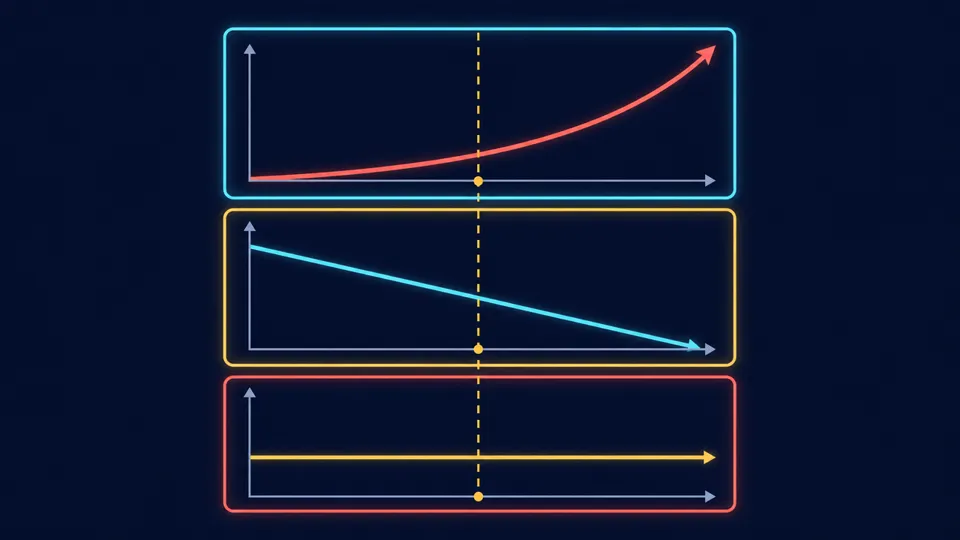
Motion Graphs
S8P3.aNewton's Laws of Motion
S8P3.b · S8P3.cKeep going
Free activities for this unit that go deeper.