 Tobin
TobinExplore
Jump in anywhere, in any order. Every activity reshuffles each time you play, so there's always something new. You earn hertz for every right answer.
Big questions to wonder about
By the end of this unit, you'll be able to answer every one of these.

Why does the lightning flash always reach you before the thunder?

A ringing phone sits in a jar with all the air pumped out. Could you still see its screen? Could you hear it?

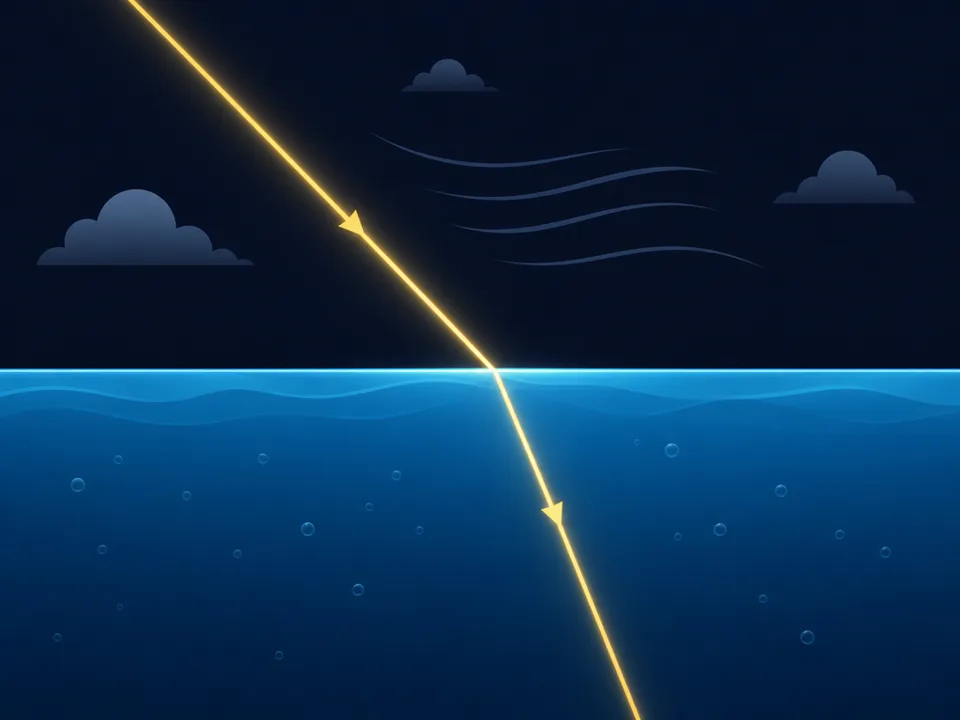
Why does a straw look broken when it sits in a glass of water?
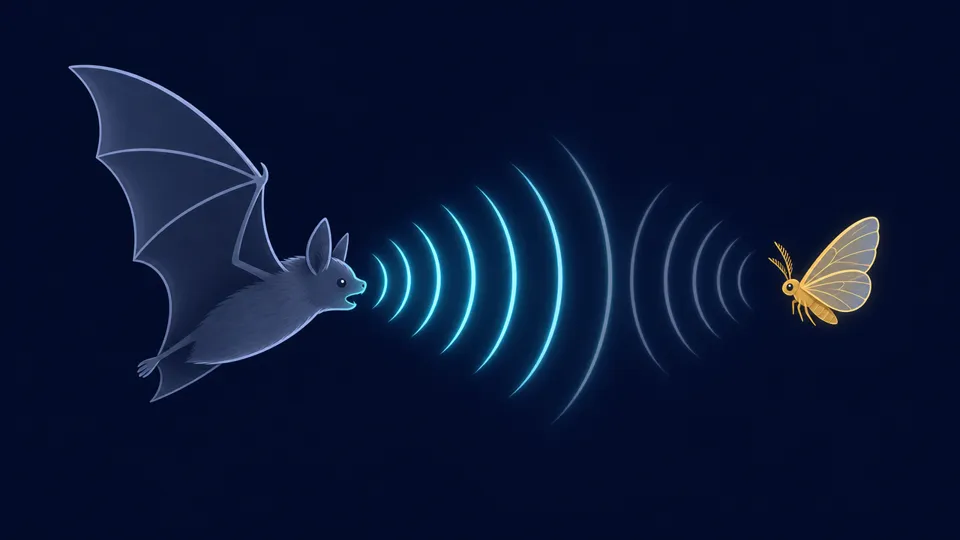
How can a bat find a tiny moth in total darkness?
Word Wall
The 14 words you'll own by the end of this unit. Tap any card to flip it. Words you collect in the activities get a ✓.
Unit Roadmap
Five parts, in the order we'll learn them.

Part 1: Wave Basics & Wave Properties
- What a wave is
- Mechanical vs. electromagnetic
- Transverse vs. longitudinal
- Amplitude, wavelength, frequency & v = f × λ

Part 2: The Electromagnetic Spectrum
- Radio to gamma, in order
- Visible light: the rainbow slice
- What each band is used for
- Energy and safety
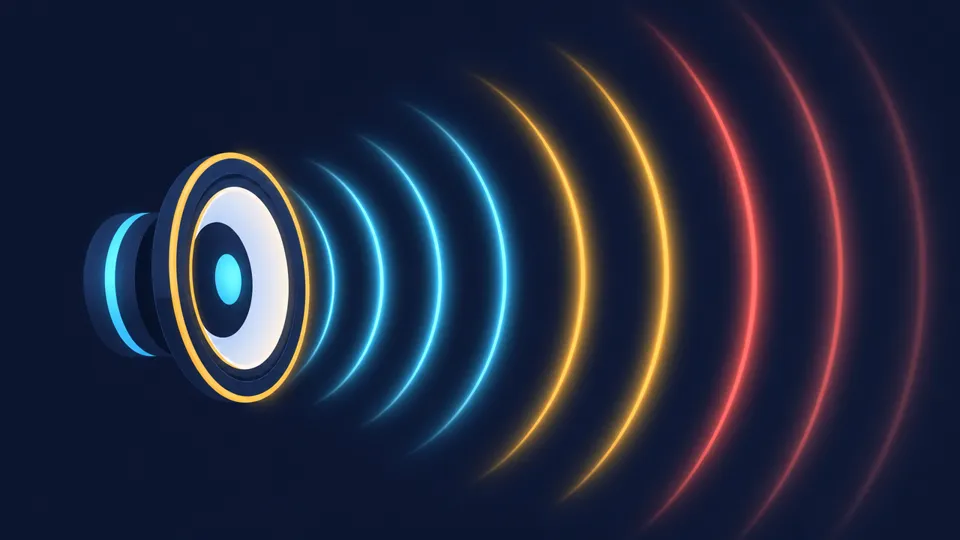
Part 3: Sound Waves
- Pitch = frequency
- Loudness = amplitude
- Why solids carry sound fastest
- Echoes and absorption
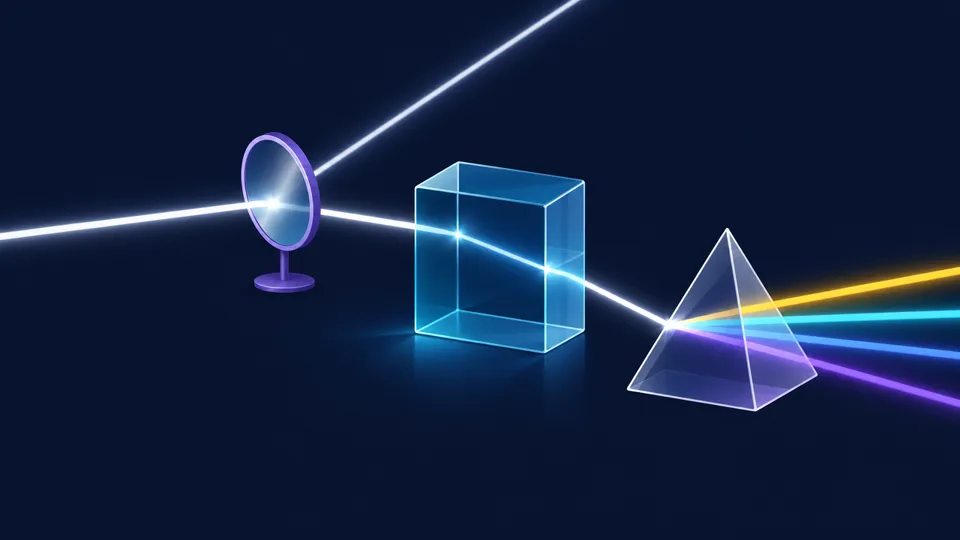
Part 4: Wave Behaviors
- Reflection & refraction
- Absorption & transmission
- Diffraction
- Interference (lite)

Part 5: Lenses & Mirrors
- Convex and concave lenses
- Real vs. virtual images
- Plane, concave & convex mirrors
- Microscopes, telescopes & cameras
Learning Targets & Success Criteria
I am learning to…
- Identify similarities and differences between electromagnetic and mechanical waves
- Describe the relationships between wave properties and energy
- Analyze how waves behave differently in different mediums
- Explain how the amount of energy determines the different types of electromagnetic waves
- Apply the electromagnetic spectrum to practical everyday uses
- Explain how light and sound waves are reflected, refracted, absorbed, diffracted and transmitted through different materials
- Use lenses to make light behave in different ways that can assist us in everyday tasks
I will be successful when I can…
- Compare & contrast characteristics of electromagnetic and mechanical waves
- Measure the wavelength, amplitude and frequency in relation to both electromagnetic and mechanical waves
- Relate the wavelength, amplitude and frequency to the amount of energy in a wave
- Use real world example to explain how wave speed changes in different media (state of matter)
- Explain and illustrate energy within different types of electromagnetic waves using data
- Identify & describe real-world applications where the EM spectrum can be used
- Compare & contrast how light and sound waves behave in different mediums (refraction, absorption, diffraction, transmission, reflection)
- Make and use models to show the effects that lenses have on light, including uses for lenses in technology
Standards
Obtain, evaluate, and communicate information to support the claim that electromagnetic (light) waves behave differently than mechanical (sound) waves.
Ask questions to develop explanations about the similarities and differences between electromagnetic and mechanical waves.
Construct an explanation using data to illustrate the relationship between the electromagnetic spectrum and energy.
Design a device to illustrate practical applications of the electromagnetic spectrum (e.g., communication, medical, military).
Develop and use a model to compare and contrast how light and sound waves are reflected, refracted, absorbed, diffracted or transmitted through various materials.
Analyze and interpret data to predict patterns in the relationship between density of media and wave behavior (i.e., speed).
Develop and use a model (e.g., simulations, graphs, illustrations) to predict and describe the relationships between wave properties (e.g., frequency, amplitude, and wavelength) and energy.
Develop and use models to demonstrate the effects that lenses have on light (i.e., formation an image) and their possible technological applications.
Types of Waves
S8P4.aWave Properties
S8P4.fThe Electromagnetic Spectrum
S8P4.b · S8P4.cWave Behavior
S8P4.d · S8P4.eLenses
S8P4.gKeep going
Free activities for this unit that go deeper.