 Tobin
Explore
Jump in anywhere, in any order. Every activity reshuffles each time you play, so there's always something new. You earn rail miles for every right answer.
Big questions to wonder about
By the end of this unit, you'll be able to answer every one of these.
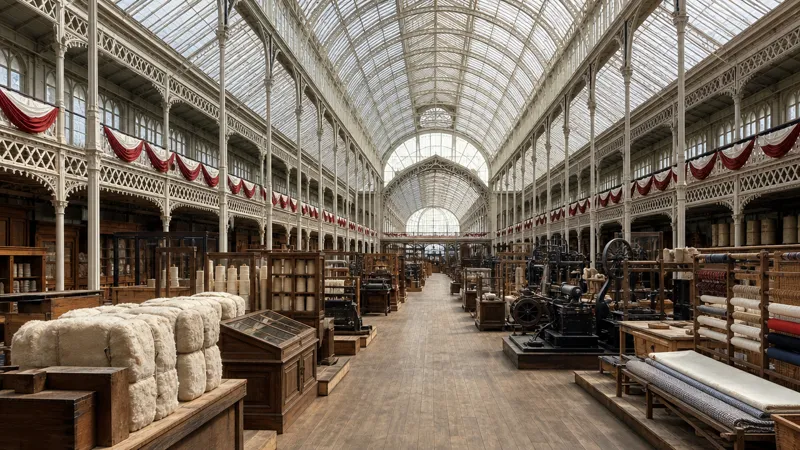
Atlanta held three giant fairs between 1881 and 1895. Who were they for, and who got to take part?Illustration (AI-generated)
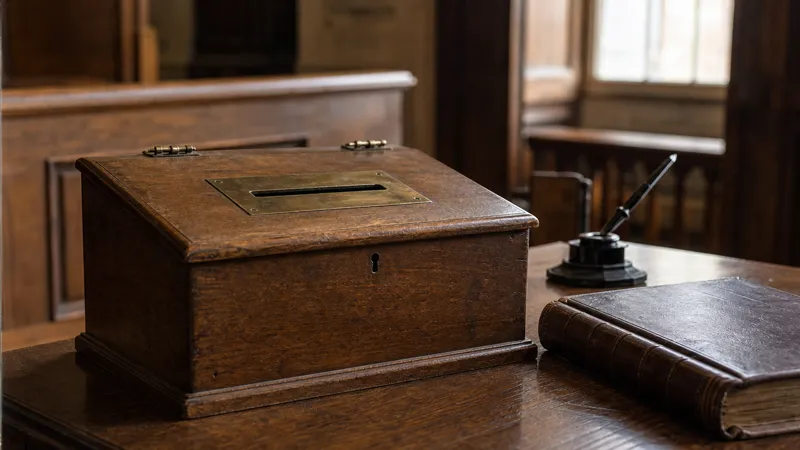
How could a voting law stop Black Georgians from voting without ever using the word "race"?Illustration (AI-generated)
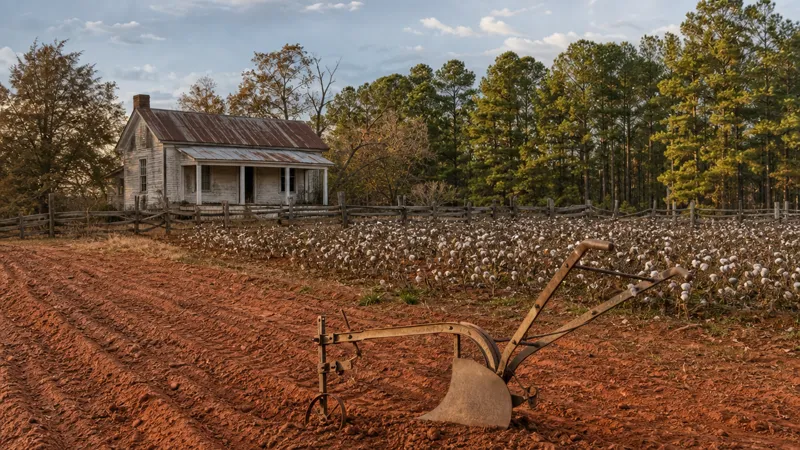
Tom Watson urged poor Black and white farmers to vote together, then later attacked Black Georgians and Jews in print. How can both be true of one man?Illustration (AI-generated)
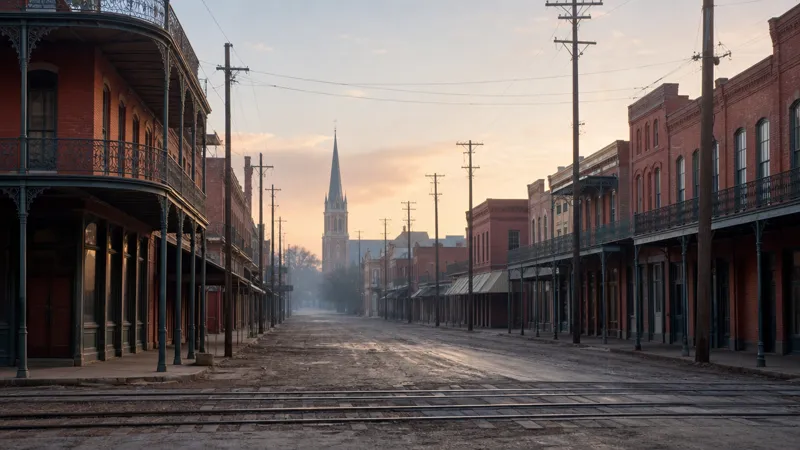
Three men bet on three different paths forward: education, rights and business. Which would you have bet on in 1900, and what evidence would you use?Illustration (AI-generated)
Word Wall
The 16 words you'll own by the end of this unit. Tap any card to flip it. Words you collect in the activities get a ✓.
Unit Roadmap
Six parts, in the order we'll learn them.
Part 1: The Bourbons and Henry Grady
- What the "New South" meant
- The Bourbon Triumvirate: Gordon, Colquitt and Brown
- Grady's 1886 speech: fact, opinion and judgment
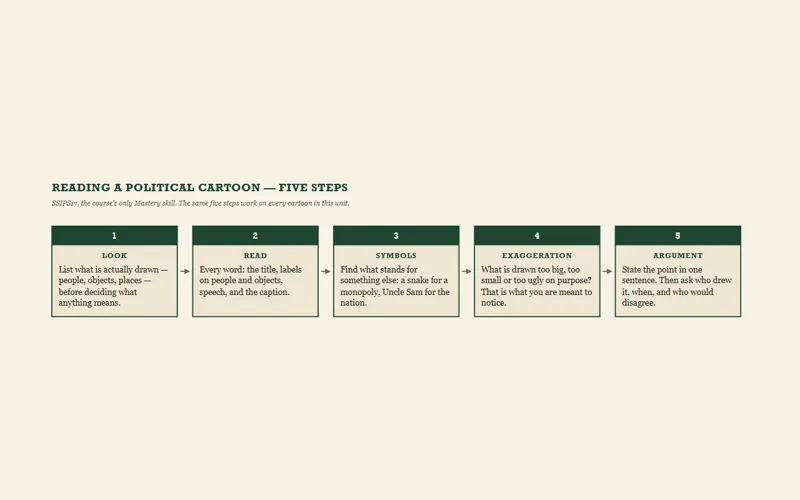
- Five steps to read a political cartoon
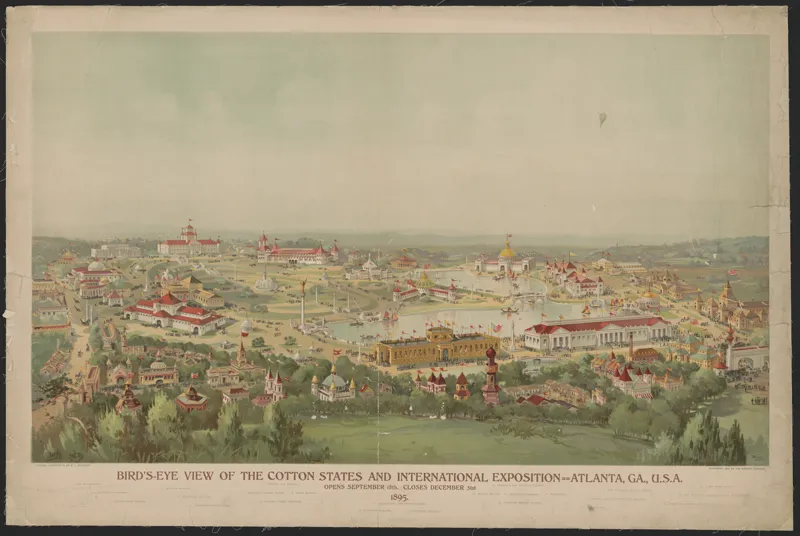 Photo: Library of Congress
Part 2: The Cotton Expositions
- 1881, 1887 and 1895: three fairs to sell a city
- Why cloth, not just cotton
- The Negro Building
- Booker T. Washington's opening-day speech
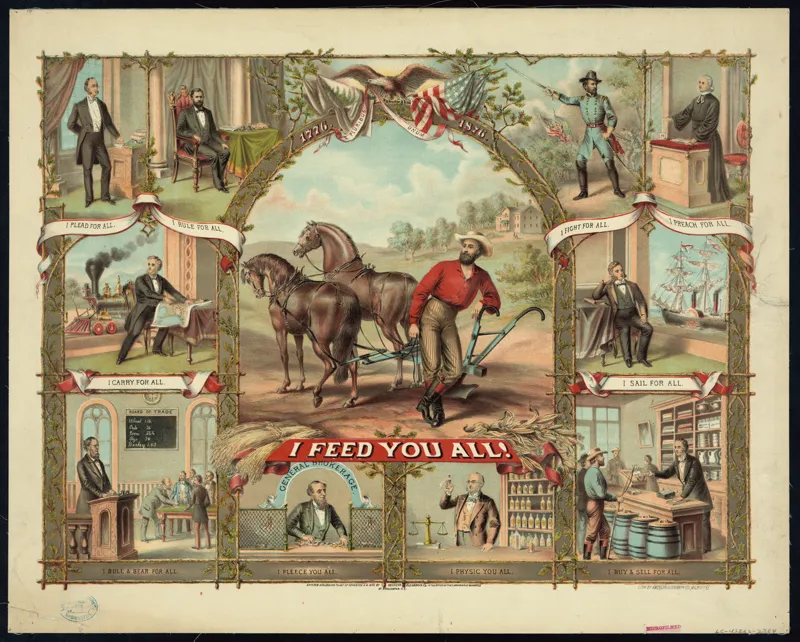 Photo: Library of Congress
Part 3: Tom Watson and the Populists
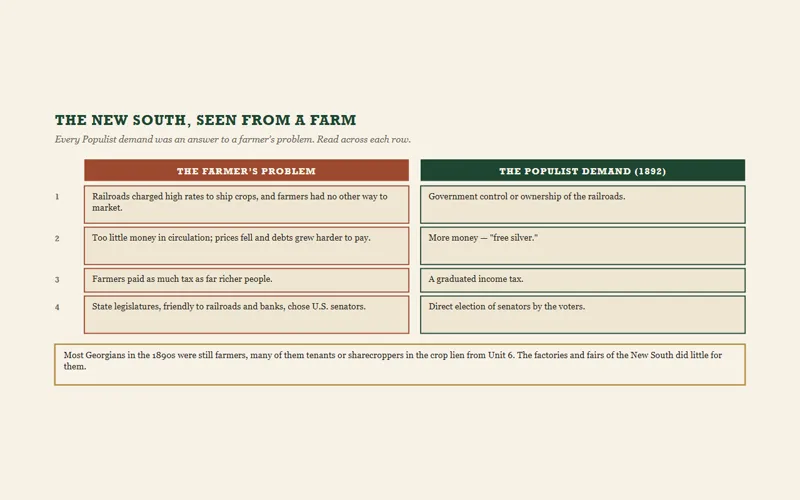
- The New South seen from a farm
- The Farmers' Alliance and the People's Party
- Rural Free Delivery
- The two Watsons
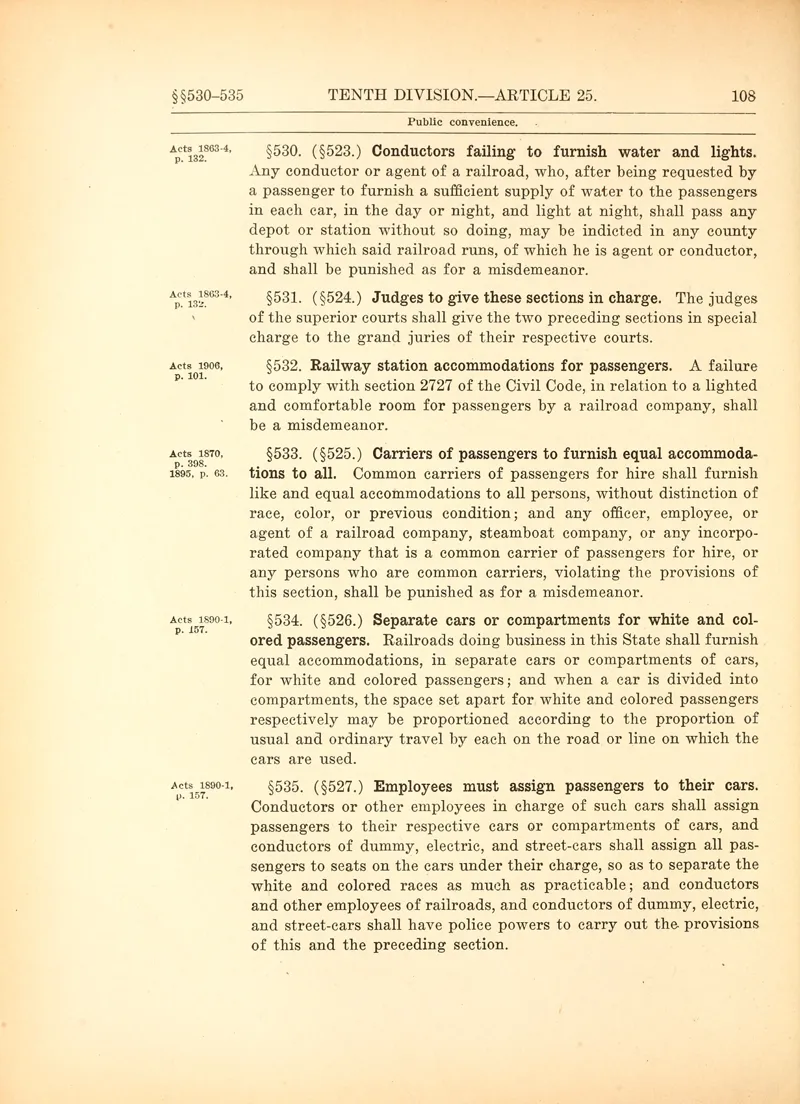 Photo: University of Georgia Law Library via Internet Archive
Part 4: Jim Crow, Plessy and the Vote
- Jim Crow laws and segregation
- The Plessy ruling and “separate but equal”
- Four voting rules that never say "race"
- The 1906 Atlanta Race Massacre: causes and consequences
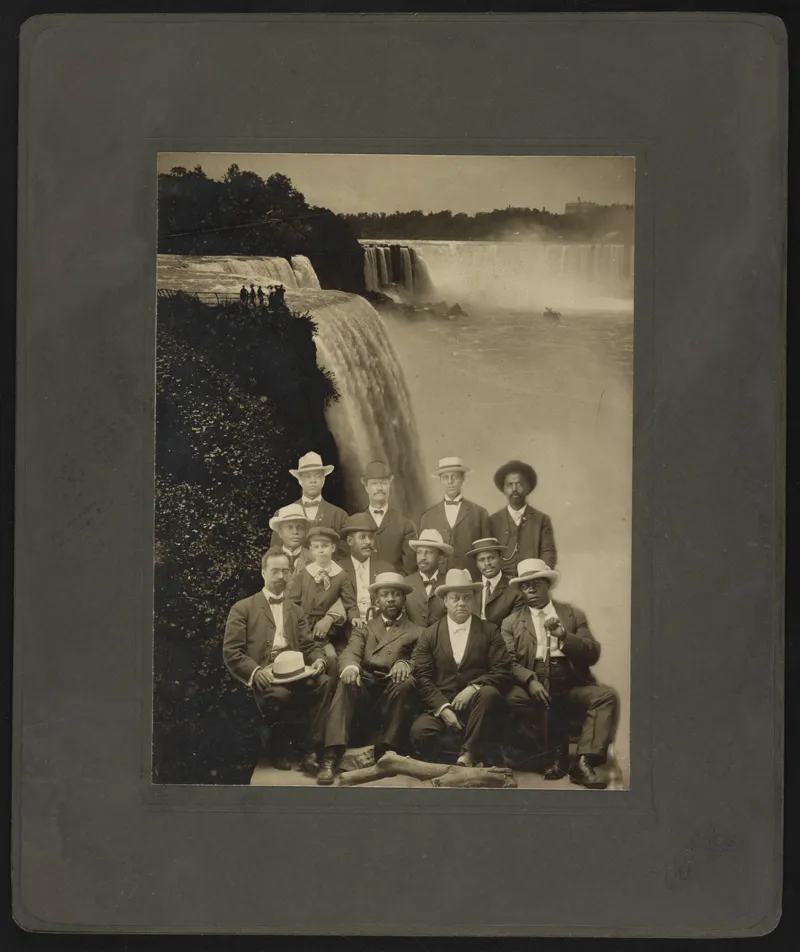 Photo: Library of Congress
Part 5: Washington, Du Bois and Herndon
- Booker T. Washington and the Atlanta Compromise
- W. E. B. Du Bois and the Talented Tenth
- Alonzo Herndon and Atlanta Life
- Three strategies, compared without a verdict
 Illustration (AI-generated)
Part 6: The Leo Frank Case
- The case and the trial
- Antisemitism and the press
- Governor Slaton's decision
- What followed
Learning Targets & Success Criteria
I am learning to…
- Identify how the Bourbon Triumvirate, Henry Grady, the Cotton Expositions, and Tom Watson and the Populists each tried to shape the New South
- Analyze how Jim Crow laws, Plessy v. Ferguson, disenfranchisement and racial violence, including the 1906 Atlanta Race Massacre, denied rights to Black Georgians
- Explain the roles of Booker T. Washington, W. E. B. Du Bois and Alonzo Herndon in advancing the rights of Black Americans
- Examine antisemitism and the resistance to racial equality in the Leo Frank case
I will be successful when I can…
- Name the three members of the Bourbon Triumvirate and describe what they stood for
- Sort a claim from Henry Grady into fact, opinion or reasoned judgment and explain how I can tell
- Describe Atlanta's three expositions and explain why the fairs cared about cloth, not just cotton
- Match each Populist demand to the farm problem behind it and state both of Tom Watson's positions
- Use the five steps to read a political cartoon and state its argument in one sentence
- Explain how segregation laws, Plessy v. Ferguson and four voting rules took rights away, and state the causes and consequences of the 1906 Atlanta Race Massacre
- Compare the strategies of Washington, Du Bois and Herndon, and explain what the Leo Frank case shows about antisemitism and the law
Standards
Evaluate key political, social, and economic changes that occurred in Georgia during the New South Era.
Identify the ways individuals, groups, and events attempted to shape the New South; include the Bourbon Triumvirate, Henry Grady, International Cotton Expositions, and Tom Watson and the Populists.
Analyze how rights were denied to African Americans or Blacks through Jim Crow laws, Plessy v. Ferguson, disenfranchisement, and racial violence, including the 1906 Atlanta Race Massacre.
Explain the roles of Booker T. Washington, W. E. B. DuBois, and Alonzo Herndon in advancement of the rights of African Americans or Blacks in the New South Era.
Examine antisemitism and the resistance to racial equality exemplified in the Leo Frank case.
Keep going
Free tools for The New South that go deeper.
Maps, diagrams and globes on this page were drawn for this course from real coordinates (coastlines: Natural Earth, public domain). Pictures marked “Illustration (AI-generated)” were generated from written descriptions. They show places, not any real person, and are not photographs of a real location. Photographs are public domain and credited on the picture.