 Tobin

Explore
Jump in anywhere, in any order. Every activity reshuffles each time you play, so there's always something new. You earn coins for every right answer.
Big questions to wonder about
By the end of this unit, you'll be able to answer every one of these.
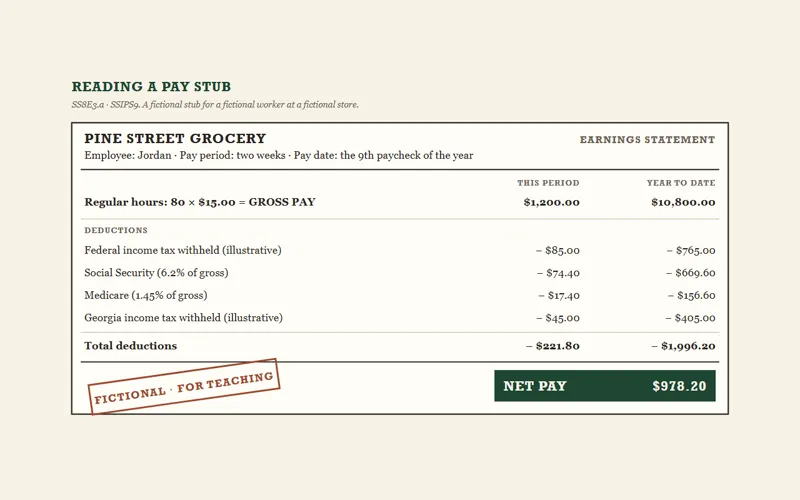
Jordan earns $1,200.00 in two weeks but takes home only $978.20. Where did the rest go?

Why can a car loan with a smaller monthly payment end up costing more?Illustration (AI-generated)

In the 1930s thousands of banks closed and people lost their savings. Why does that almost never happen now?Photo: Library of Congress, Bain Collection
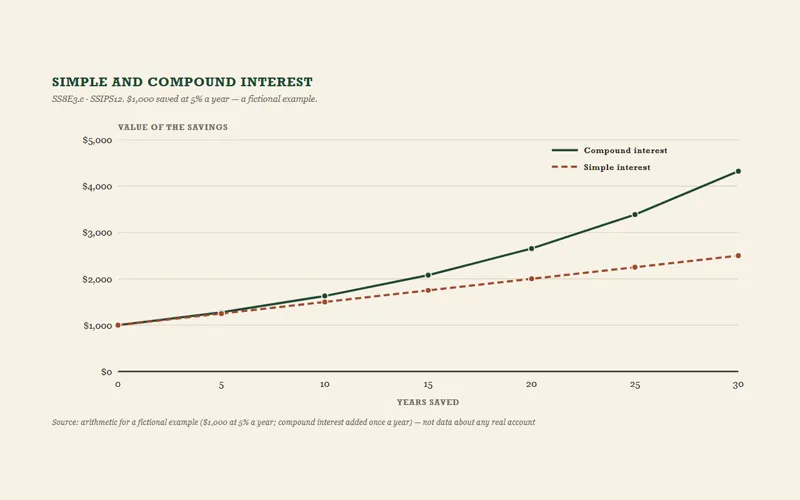
Why would $1,000 saved for 30 years grow to $4,321.94 one way and only $2,500.00 another way?
Word Wall
The 20 words you'll own by the end of this unit. Tap any card to flip it. Words you collect in the activities get a ✓.
Unit Roadmap
Five parts, in the order we'll learn them.
 Photo: Library of Congress, FSA/OWI
Part 1: Income: Where Money Starts
- Wages, salaries, tips and profit
- Skills, schooling and pay
- The minimum wage
- Gross pay, net pay and the pay stub
 Photo: Library of Congress, FSA/OWI
Part 2: Building a Household Budget
- What a budget is
- Fixed and variable expenses
- Needs and wants
- Five steps to a budget
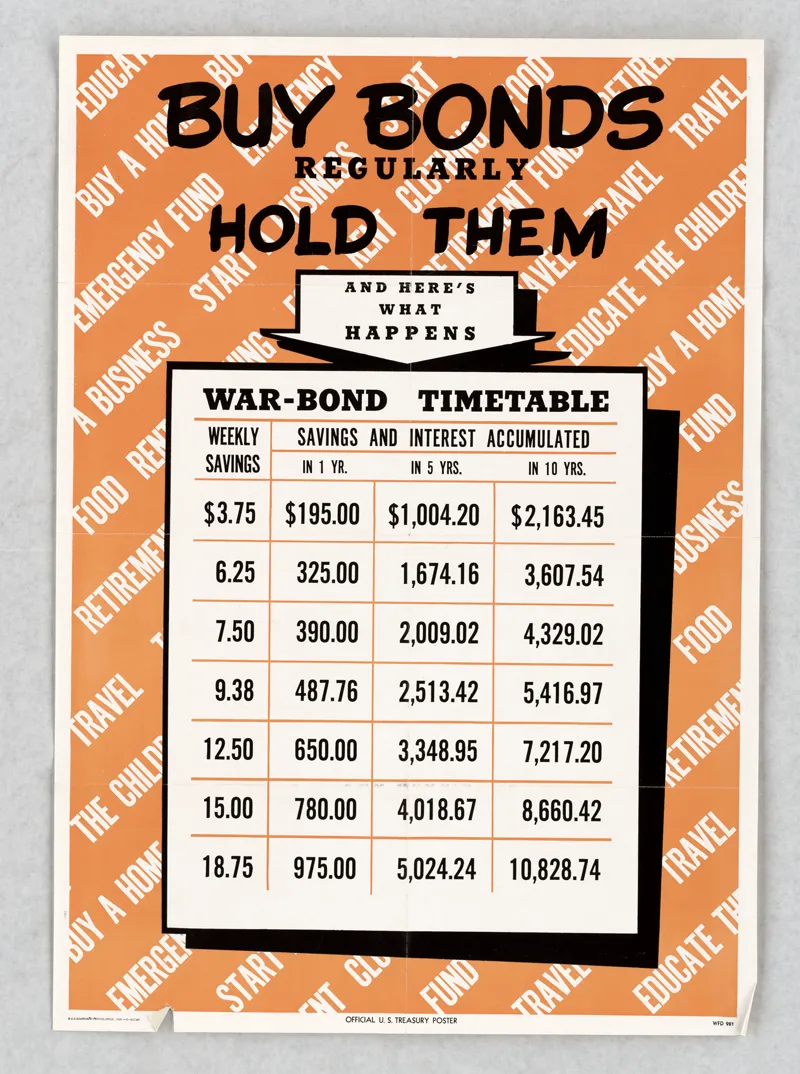 Photo: National Archives
Part 3: Why Saving Works
- Three reasons to save
- The emergency fund
- Bank runs and the FDIC
- Simple and compound interest
 Photo: Library of Congress, FSA/OWI
Part 4: Debt, Interest and Risk
- What debt and credit are
- Uses of debt
- The cost of borrowing: APR and time
- The risks of debt
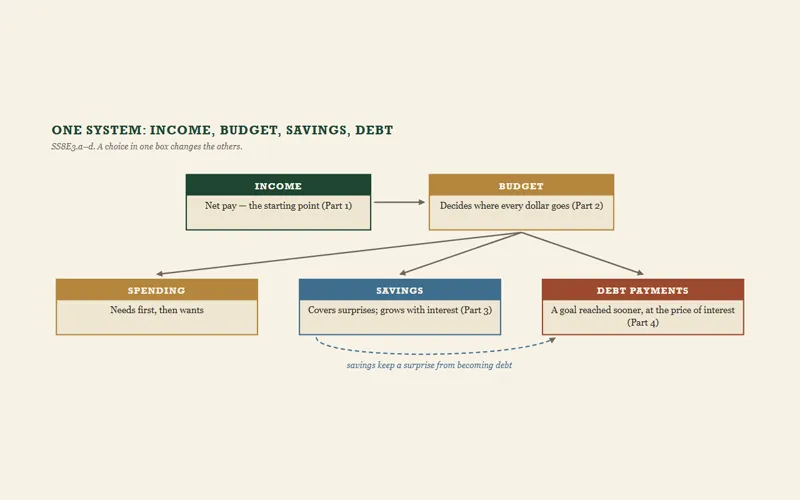
Part 5: Putting It Together
- Income, budget, savings and debt as one system
- A year of money choices
- Reading and building money charts
Learning Targets & Success Criteria
I am learning to…
- Explain why income is the starting point of every money plan
- Describe the reasons for a household budget and what it does for a family
- Describe why people save and how interest makes savings grow
- Describe what debt is used for and the risks that come with it
I will be successful when I can…
- Find gross pay, each deduction and net pay on a pay stub, and explain why a budget starts from net pay
- Build a budget in which every dollar has a job, and sort costs as fixed or variable and as needs or wants
- Name three reasons to save and explain what an emergency fund does
- Compare simple and compound interest over time
- Explain how the APR and the length of a loan set its total cost
- Describe the risks of debt, including interest, lost income, collateral and a credit history
Standards
Explain the principles of effective personal money management.
Explain that income is the starting point for personal financial management.
Describe the reasons for and the benefits of a household budget.
Describe the reasons for and the benefits of savings.
Describe the uses of debt and associated risks.
Keep going
Free tools for Personal Finance that go deeper.

Maps, diagrams and globes on this page were drawn for this course from real coordinates (coastlines: Natural Earth, public domain). Pictures marked “Illustration (AI-generated)” were generated from written descriptions. They show places, not any real person, and are not photographs of a real location. Photographs are public domain and credited on the picture.