 Tobin
TobinExplore
Jump in anywhere, in any order. Every activity reshuffles each time you play, so there's always something new. You earn joules for every right answer.
Big questions to wonder about
By the end of this unit, you'll be able to answer every one of these.
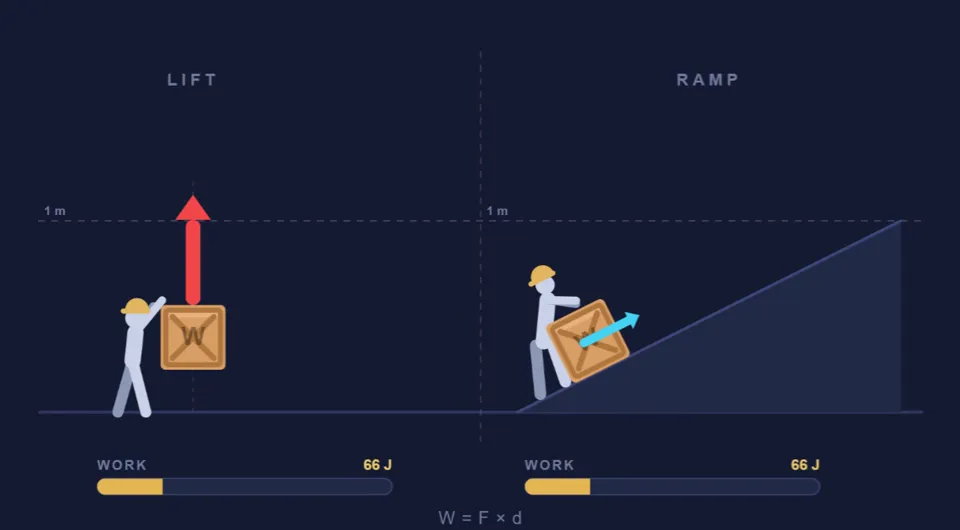
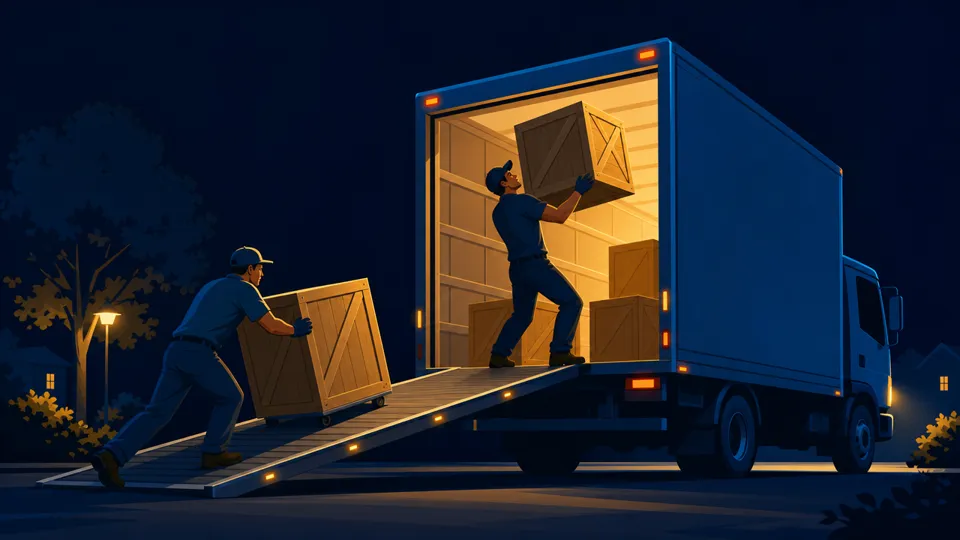
How can a ramp make a 2,500 N piano feel like 250 N — without breaking the laws of physics?

You push on a wall until you're exhausted. Did you do any work?
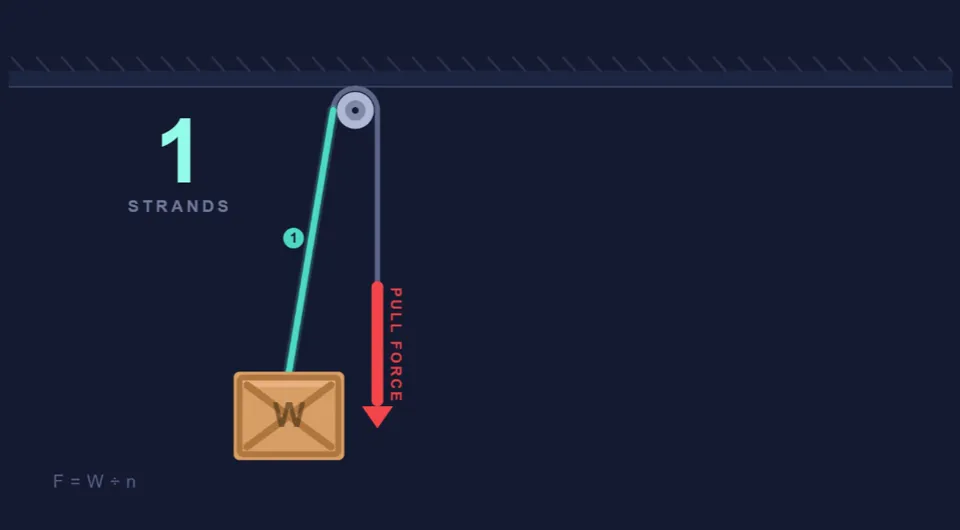
Why does a flagpole pulley make you pull DOWN to raise the flag UP?
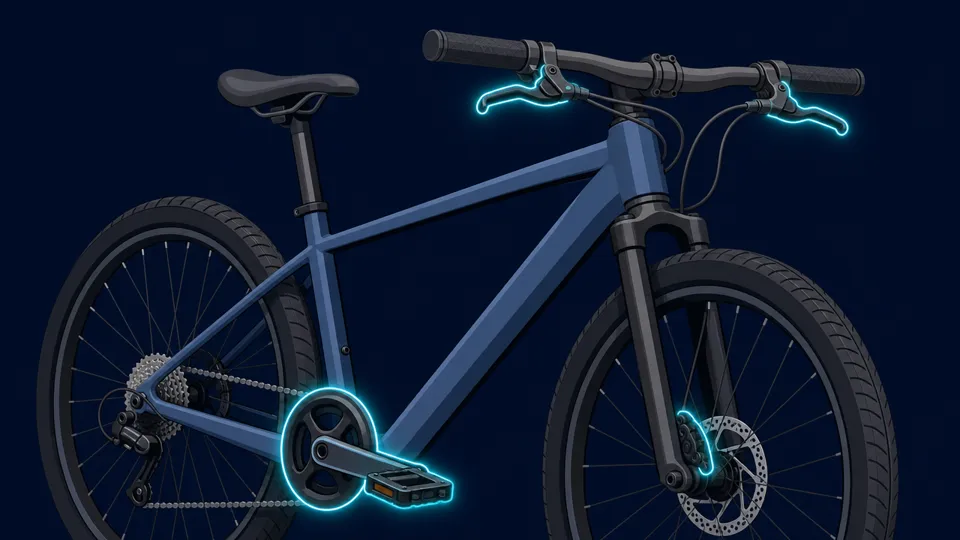
How many simple machines are hiding in a bicycle?
Word Wall
The 14 words you'll own by the end of this unit. Tap any card to flip it. Words you collect in the activities get a ✓.
Unit Roadmap
Three parts, in the order we'll learn them.
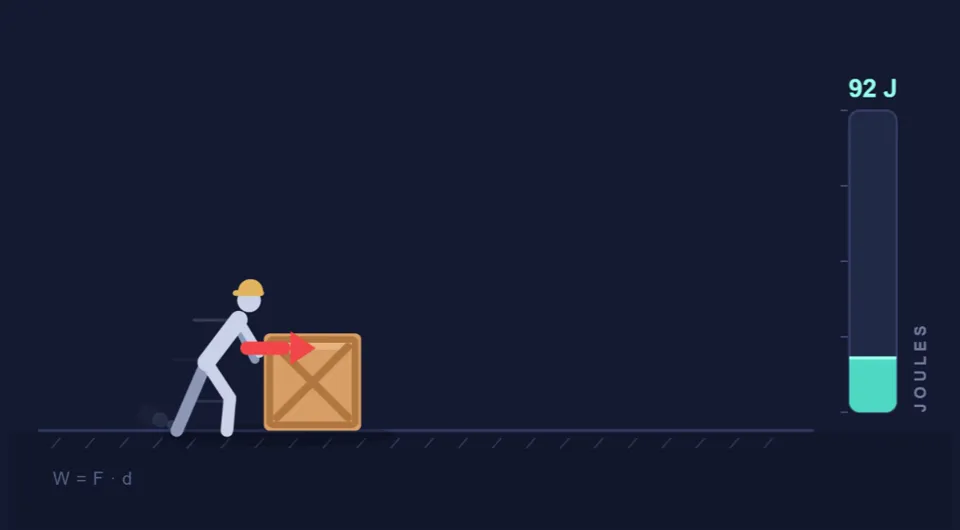
Part 1: Work & Power
- What counts as work
- The three-part work test
- W = F × d
- Power (P = W ÷ t)
Part 2: The Six Simple Machines & Mechanical Advantage
- What a machine does
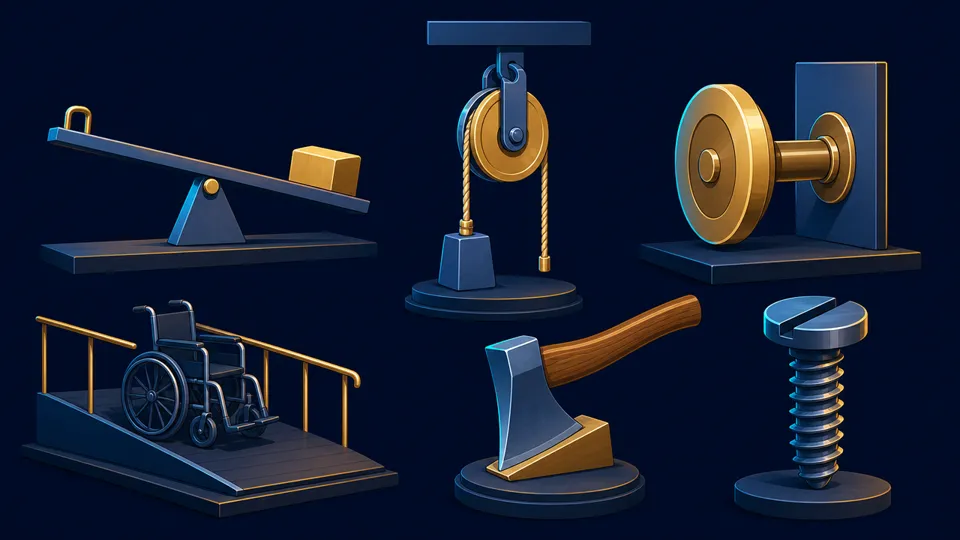
- Meet all six
- MA two ways
- Lever classes & pulleys
Part 3: The Trade-Off & Compound Machines
- The rule machines can't break
- The ramp proof
- Efficiency
- Compound machines
Learning Targets & Success Criteria
I am learning to…
- Calculate work and power, and explain when work is (and isn't) being done
- Identify the six simple machines and how each changes the size or direction of a force
- Calculate mechanical advantage and efficiency
- Explain why machines trade force for distance but never reduce the work
I will be successful when I can…
- Use W = F × d and the three-part work test to decide whether work is done
- Name and spot all six simple machines in everyday objects
- Calculate mechanical advantage two ways: output force ÷ input force, and input distance ÷ output distance
- Sort levers into three classes and count the strands supporting a pulley load
- Calculate efficiency and explain why it is always less than 100%
- Break a compound machine (scissors, a bike) into its simple machines
Standards
Obtain, evaluate, and communicate information to explain the relationships among force, mass, and motion.
Use mathematics and computational thinking to identify the relationships between work, mechanical advantage, and simple machines.