 Tobin
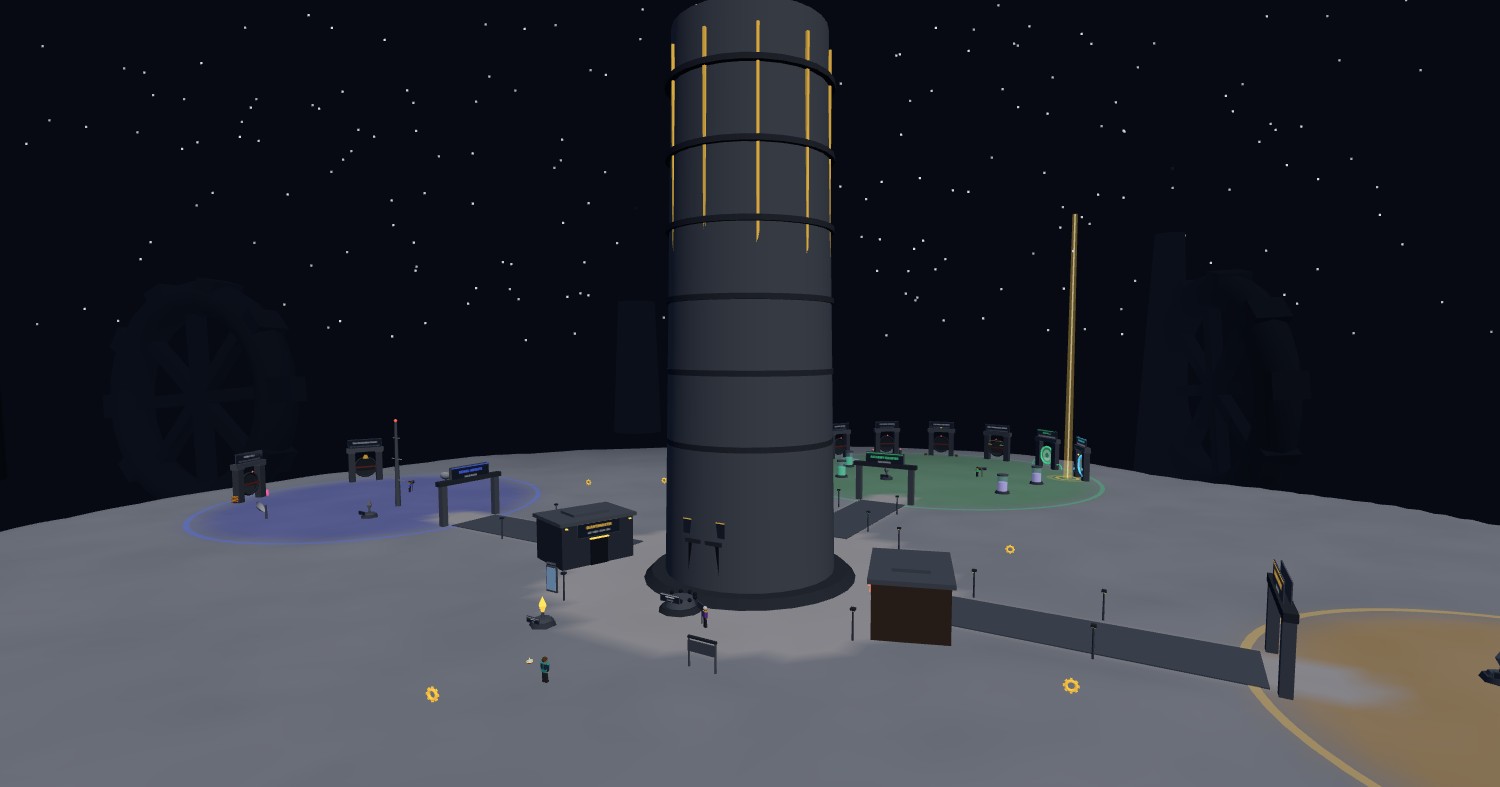
Trials. Overload. Core.
Each of the ten zones is one standard. The loop is the same every time, and nothing inside it is a worksheet in disguise.
Four trials
Four mini-games per zone, each a different genre — build an atom, platform along a periodic trend, balance an equation on a scale, dig for half-lives, route energy through pipes, survive a coil field. Three stars for a clean run; a hint after a miss and a card after two.
The Overload
Clear three trials and the arena opens. The boss is powered by questions: right answers raise the stability meter, wrong ones cost composure and show why. Class skills, helpers and gear change the odds. Tiers II and III come back harder with better drops.
Seat the Core
The first win seats a Reactor Core and lights another seam of the Spire. Ten Cores open the Core Chamber, where the Great Engine pools every standard into one last fight, and the Boss Rush waits for the students who want more.
A world built for a year of play
Reactor World
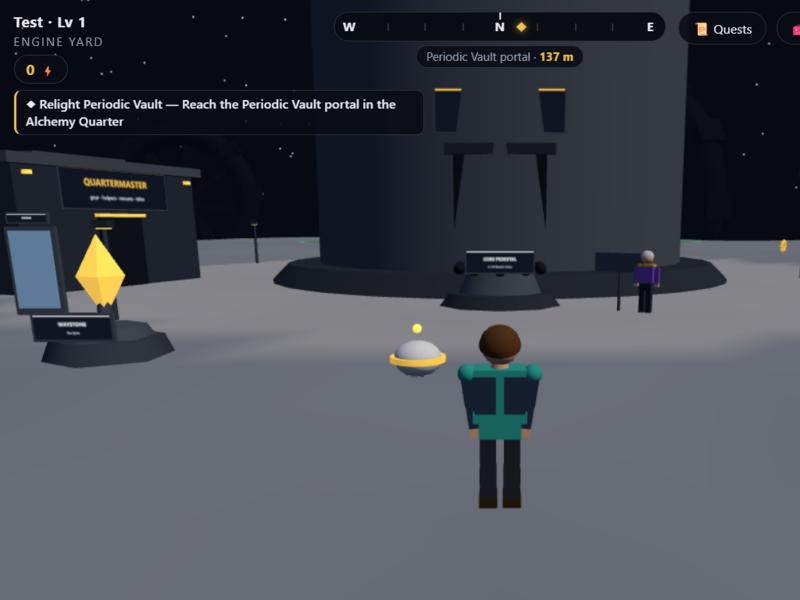
The Engine Yard — the Spire, the Quartermaster, and your drone Bolt
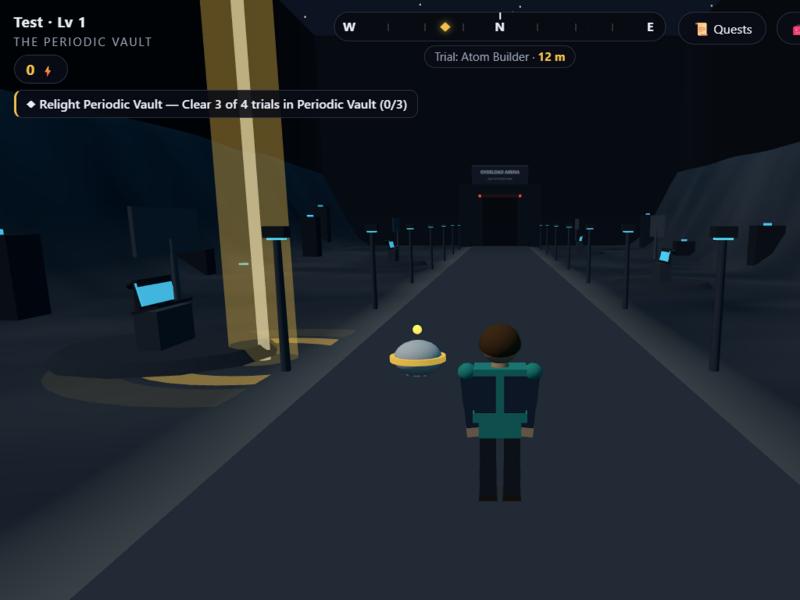
The Periodic Vault — four trial consoles on the way to the Overload Arena
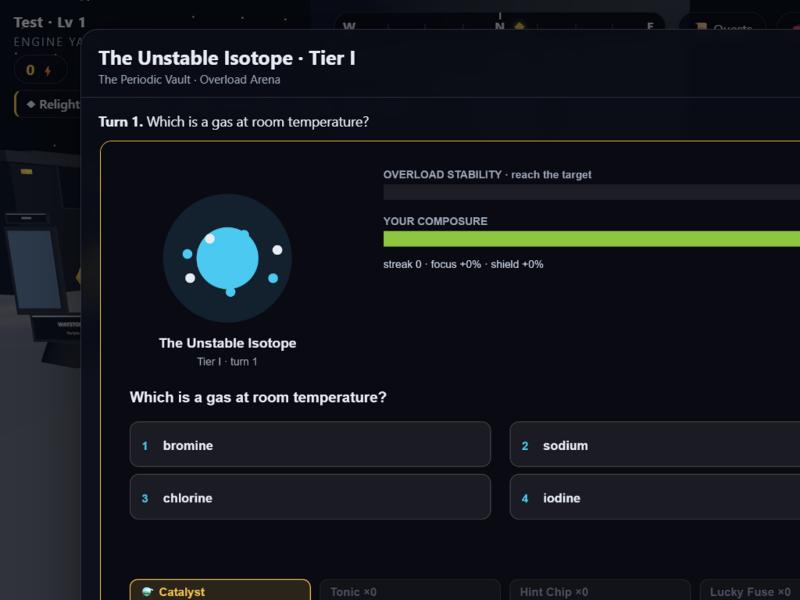
The Overload — every turn is a question; stability up, composure down
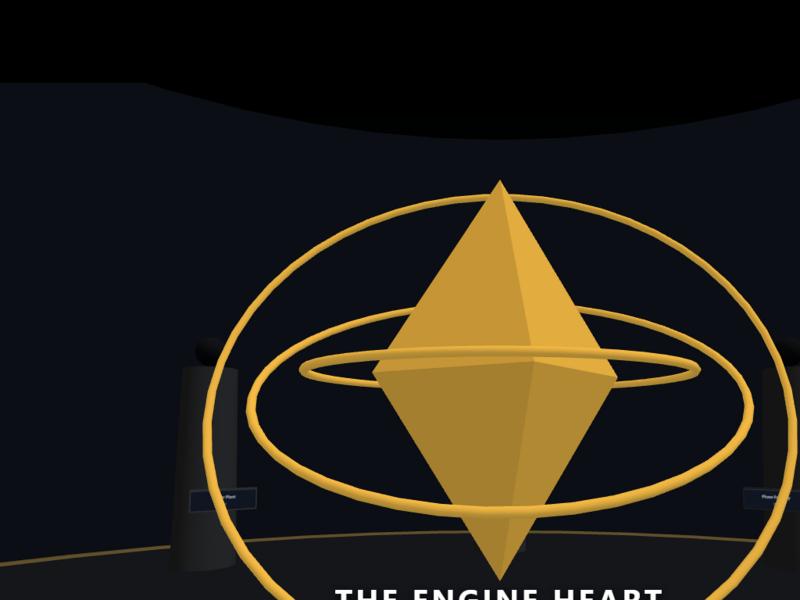
The Core Chamber — ten Cores seated, the Great Engine turns over
Ten Reactors, ten standards
Georgia Standards of Excellence, in the order the course teaches them. Every trial is tagged with the element it builds, and the Teacher Data page reports progress element by element.
Atoms, ions, isotopes and periodic trends. Boss: The Unstable Isotope.
Ionic and covalent bonding, formulas and names. Boss: The Misnamed Compound.
Conservation of matter and balanced equations. Boss: The Unbalanced Equation.
Fission, fusion, decay and half-life. Boss: The Runaway Reaction.
States of matter and gas laws. Boss: The Pressure Surge.
Solutions, solubility, acids and bases. Boss: The Caustic Tide.
Energy transformations, heat and specific heat. Boss: The Thermal Overload.
Motion, Newton’s laws, gravity, work and machines. Boss: The Runaway Payload.
Wave properties, media and the Doppler effect. Boss: The Feedback Loop.
Ohm’s law, circuits and electromagnetism. Boss: The Short Circuit.
Assign it in one link
How it runs in a classroom
- Students open the link, type a name, pick a class and the opening plays. No account, nothing to install.
- One zone per unit is the simplest plan: a zone is 40–70 minutes of play across its trials and the Tier I boss, so two 20-minute sessions a week keep pace. Everything beyond Tier I is optional depth.
- Teacher Data is in the pause menu (Esc). It prints, or saves as a PDF, a one-page report per student: trials cleared, bosses beaten, gold stars and boss tier for every SPS element, plus Cores relit and time played.
- Progress lives on the student’s device. A save code (it starts with
RW1-) moves it to any other computer; collecting codes on a Friday form doubles as a sign-in sheet. - A hint appears after a miss and a card after two; every boss question explains its answer. A stuck student is retaught, not stopped.