 Tobin
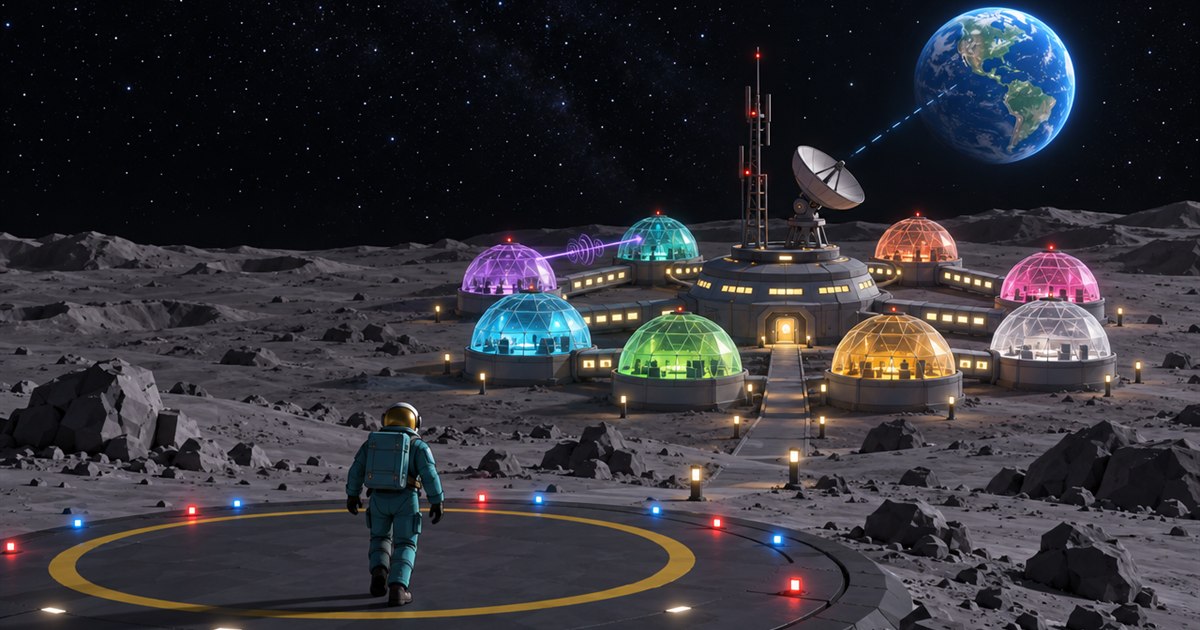
Learn it. Use it in the base. Prove it.
Each of the eight domes teaches one wave idea three different ways, so nothing is a worksheet in disguise and nothing repeats.
Learn at the board
A hands-on puzzle board — slide, tune, aim, sort — with a hint after a miss and a Field Guide card after two. The science is in the doing.
Walk it in the dome
Then the same idea is built into the room: crank a wave wall, steer a laser through a mirror maze, listen round a corner, race sound through pipes.
Certify — no hints
A certification run with fresh problems. Pass it and the dome comes back online, a fragment of the crew's last message plays, and the base gets a little brighter.
A whole moon to explore
Tycho Relay
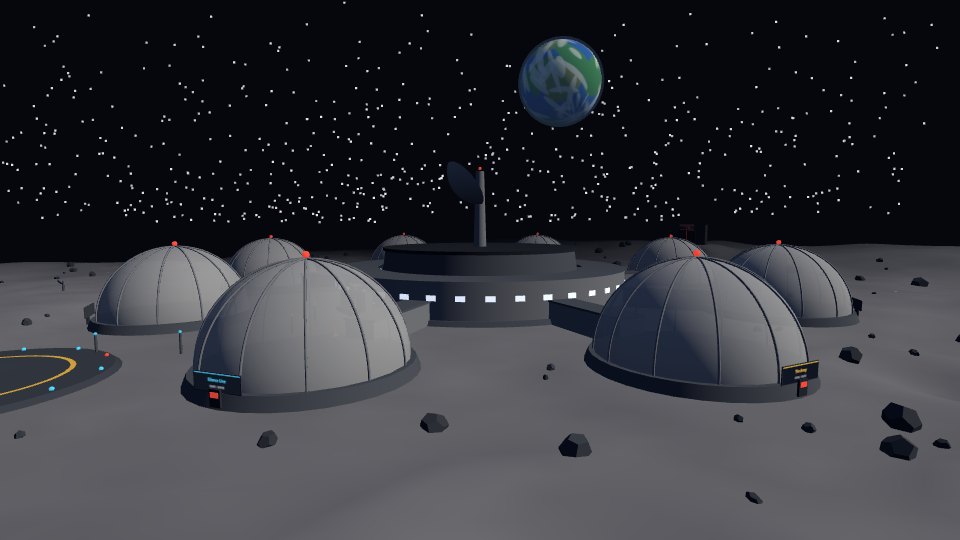
The base from the ridge — eight domes round the Concourse ring
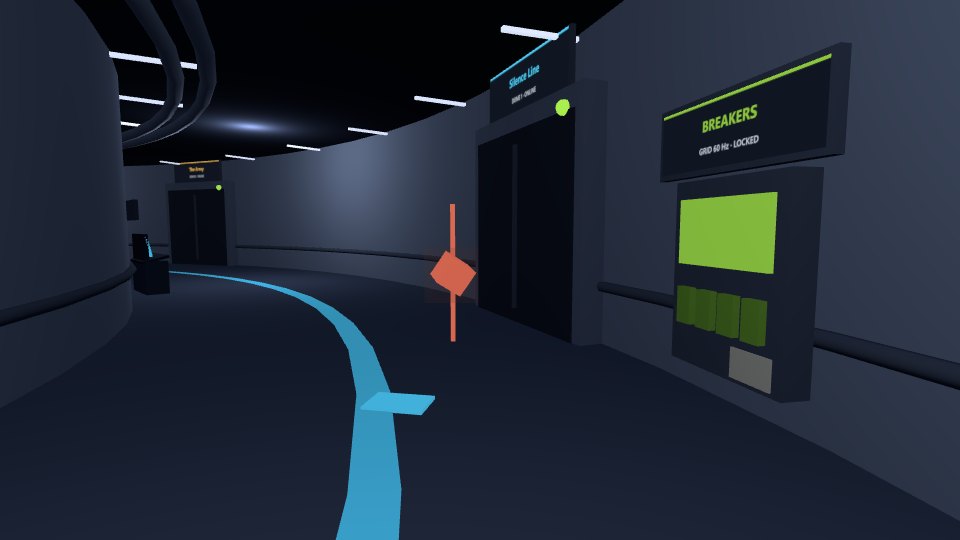
The Concourse — every dome door opens from here
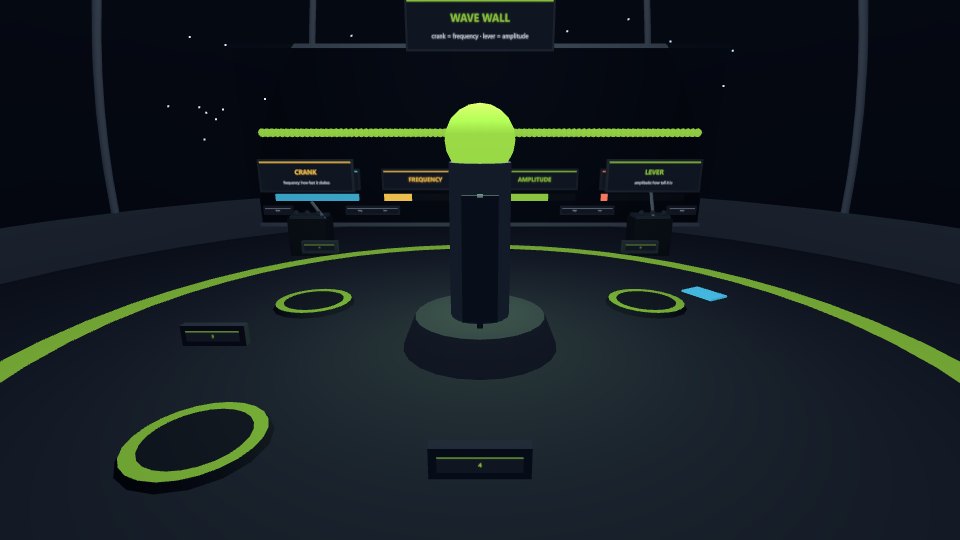
Control Room — amplitude, frequency, wavelength and energy
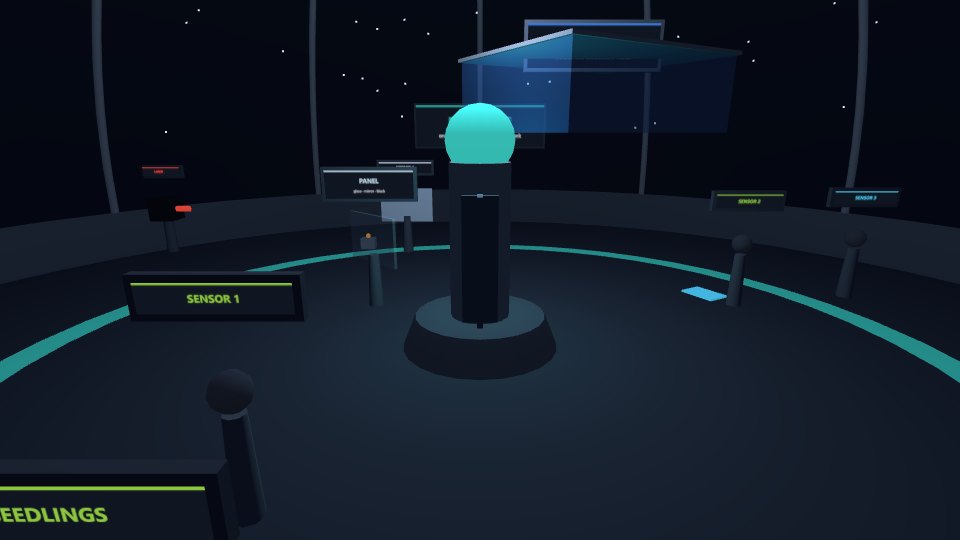
Water Farm — steer the laser through the mirror maze to the sensors
What students master
Georgia Standards of Excellence. Every dome is tagged with the element it builds, and the Teacher Data page reports progress element by element.
Obtain, evaluate, and communicate information to support the claim that electromagnetic (light) waves behave differently than mechanical (sound) waves.
- a — similarities and differences between electromagnetic and mechanical waves
- b — the electromagnetic spectrum and energy
- c — a device that applies a band of the spectrum (communication, medical, security)
- d — how light and sound are reflected, refracted, absorbed, diffracted or transmitted
- e — density of the medium and wave speed
- f — frequency, amplitude, wavelength and energy
- g — lenses, image formation and their uses
Obtain, evaluate, and communicate information to explain the properties of waves.
- a — wavelength, frequency and energy in electromagnetic waves; amplitude and energy in mechanical waves
- b — electromagnetic versus mechanical waves
- c — reflection, refraction, interference and diffraction from evidence
- d — how different media change the speed of sound and light
- e — the Doppler effect in sound
Assign it in one link
How it runs in a classroom
- Students open the link for their course; the game asks for a name and a suit, then the story starts. No account, nothing to install.
- Roughly fifteen hours of play across the eight domes, races, quests and the Relay — stay ten minutes or a whole unit.
- The Teacher Data sign in the Concourse prints a one-page report (or saves it as a PDF) with levels, certifications and time per standard element. Students can show it on screen or upload it to an assignment.
- Progress lives on the student's device. A save code (it starts with
SL1-) moves it to another computer. - A hint appears after a miss and a Field Guide card after two, so a student who is stuck is retaught, not stopped.