 Tobin
TobinExplore
Jump in anywhere, in any order. Every activity reshuffles each time you play, so there's always something new. You earn grams for every right answer.
Big questions to wonder about
By the end of this unit, you'll be able to answer every one of these.

Where did the missing 1,850 grams of firewood go? Did the fire destroy them?
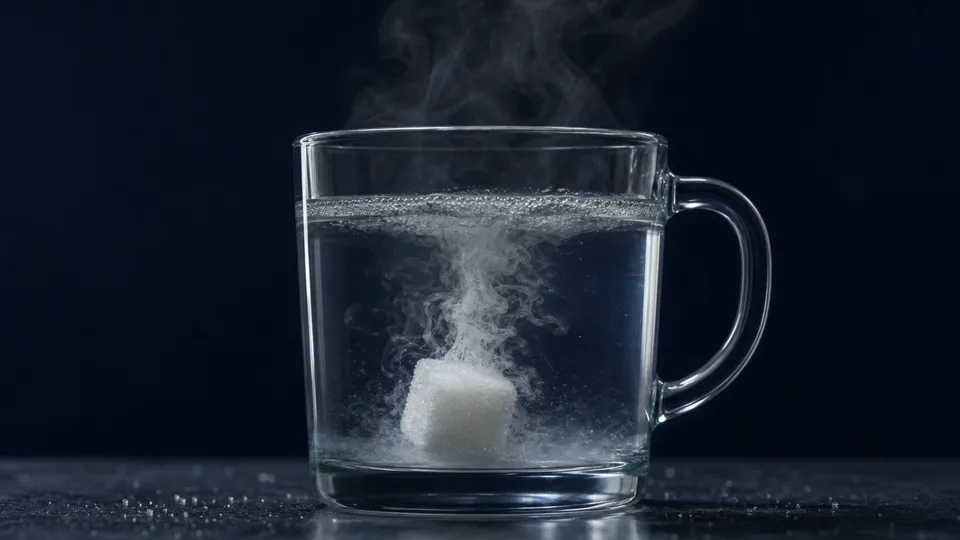
Why does food coloring spread through hot water so much faster than cold water?

If you burned wood inside a giant sealed jar, would the total mass change?

Why does a glass of ice water stay at 0 °C even while the room warms it up?
Word Wall
The 14 words you'll own by the end of this unit. Tap any card to flip it. Words you collect in the activities get a ✓.
Unit Roadmap
Four parts, in the order we'll learn them.
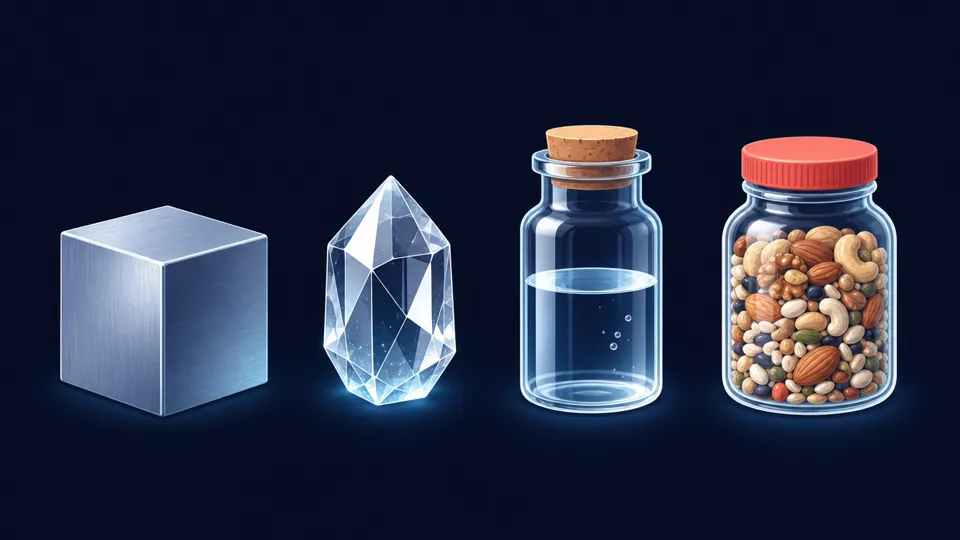
Part 1: Classification of Matter
- What matter is
- Elements & compounds
- Homogeneous & heterogeneous mixtures
- The classification flowchart
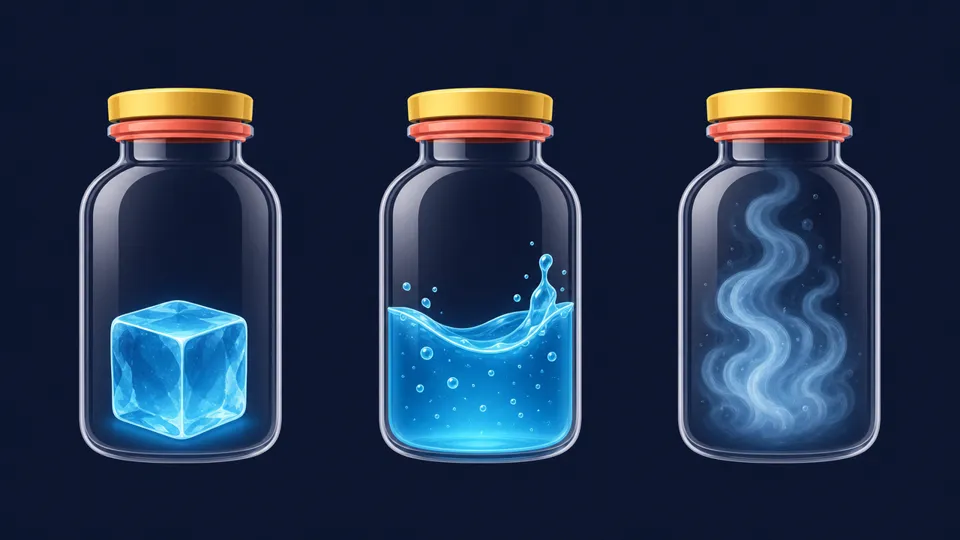
Part 2: States of Matter & Particle Motion
- Particles are always moving
- Solid, liquid, gas & plasma
- The six phase changes
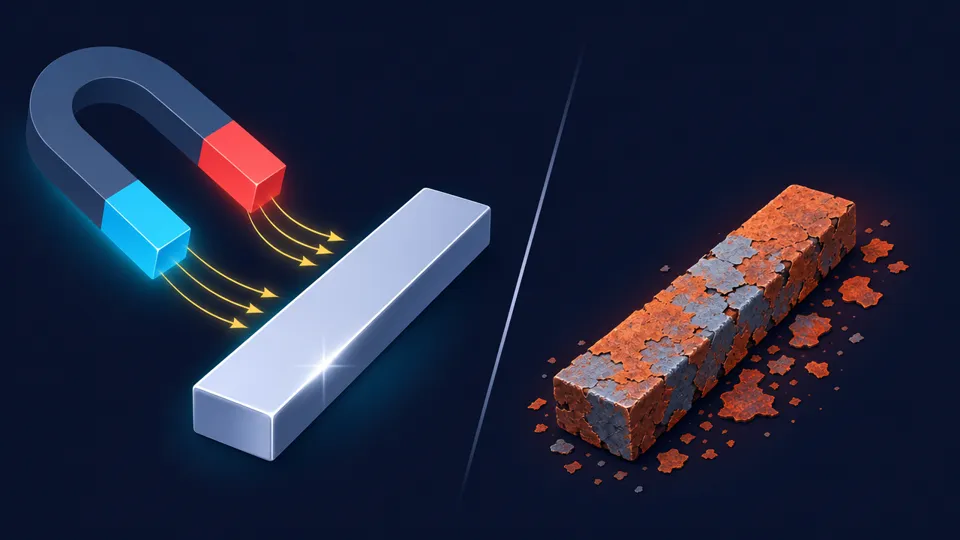
Part 3: Physical vs. Chemical Properties
- Physical properties
- Density: a substance's ID card
- Chemical properties
Part 4: Changes & Conservation of Matter
- Physical vs. chemical changes
- Evidence of a chemical change
- Arguing with CER
- Conservation of matter & counting atoms
Learning Targets & Success Criteria
I am learning to…
- Classify matter as elements, compounds, and homogeneous or heterogeneous mixtures
- Describe particle movement to show that atoms move in different ways when heat is added or removed
- Compare & contrast chemical and physical properties of matter
- Classify physical and chemical changes to substances
- Explain how matter is conserved in a chemical reaction
I will be successful when I can…
- Identify the characteristics of a solid/liquid/gas
- Compare & contrast particle models of the states of matter when heat is added or removed
- Identify physical & chemical properties of matter
- Carry out an investigation to compare & contrast chemical properties (i.e., reactivity, combustibility) and physical properties (i.e., density, melting point, boiling point) of matter
- Identify physical & chemical changes in real world examples
- Create an argument to show that a change is either physical or chemical
- Use evidence from closed and open systems to show that mass is conserved in a chemical reaction
Standards
Obtain, evaluate, and communicate information about the structure and properties of matter.
Develop and use a model to compare and contrast pure substances (elements and compounds) and mixtures.
Develop and use models to describe the movement of particles in solids, liquids, gases, and plasma states when thermal energy is added or removed.
Plan and carry out investigations to compare and contrast chemical (i.e., reactivity, combustibility) and physical (i.e., density, melting point, boiling point) properties of matter.
Construct an argument based on observational evidence to support the claim that when a change in a substance occurs, it can be classified as either chemical or physical.
Construct an explanation based on evidence to describe conservation of matter in a chemical reaction including the resulting differences between products and reactants.
Matter
S8P1.aStates of Matter
S8P1.bPhysical & Chemical Changes
S8P1.c · S8P1.dConservation of Matter
S8P1.fKeep going
Free activities for this unit that go deeper.