 Tobin
Explore
Jump in anywhere, in any order. Every activity reshuffles each time you play, so there's always something new. You earn pages for every right answer.
Big questions to wonder about
By the end of this unit, you'll be able to answer every one of these.
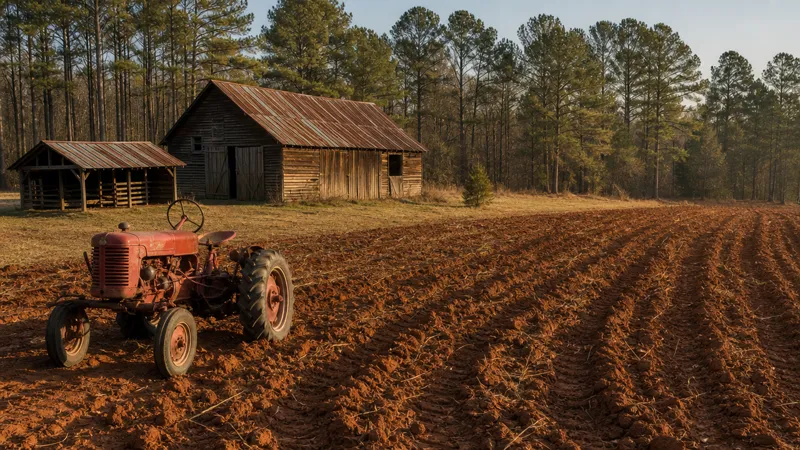
In 1940 almost half of all Georgians lived on a farm. By 1970 about one in twenty did. Where did everyone go, and why?Illustration (AI-generated)

How could a man win the most votes for governor of Georgia and still lose the race?Illustration (AI-generated)
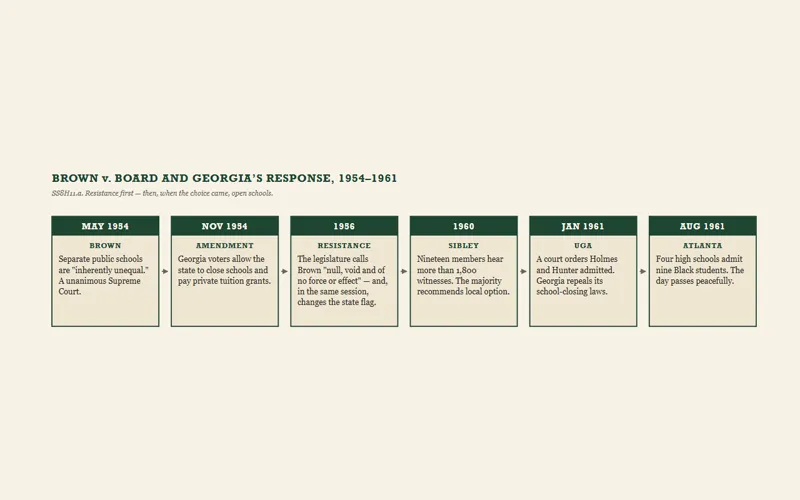
In 1960 Georgia law said an integrated school had to close. Why were Atlanta’s high schools open and integrated in 1961?

May the owner of a business that serves the public choose whom to serve? In 1964 Congress, the Supreme Court and an Atlanta restaurant owner all answered.Illustration (AI-generated)
Word Wall
The 18 words you'll own by the end of this unit. Tap any card to flip it. Words you collect in the activities get a ✓.
Unit Roadmap
Six parts, in the order we'll learn them.
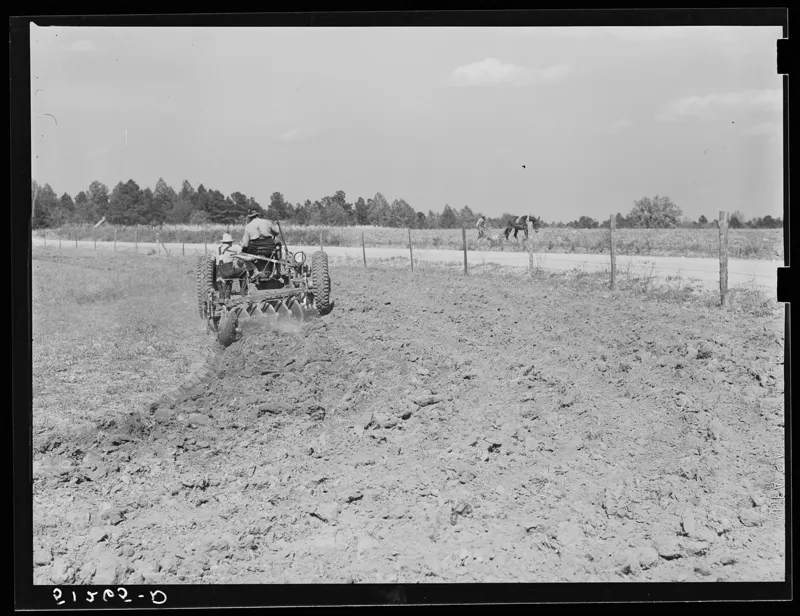 Photo: Library of Congress
Part 1: Machines Remake Georgia Farming
- Mules, hand labor and sharecropping
- Tractors, cotton pickers and new crops
- Fewer, bigger farms
- From the farm to the city
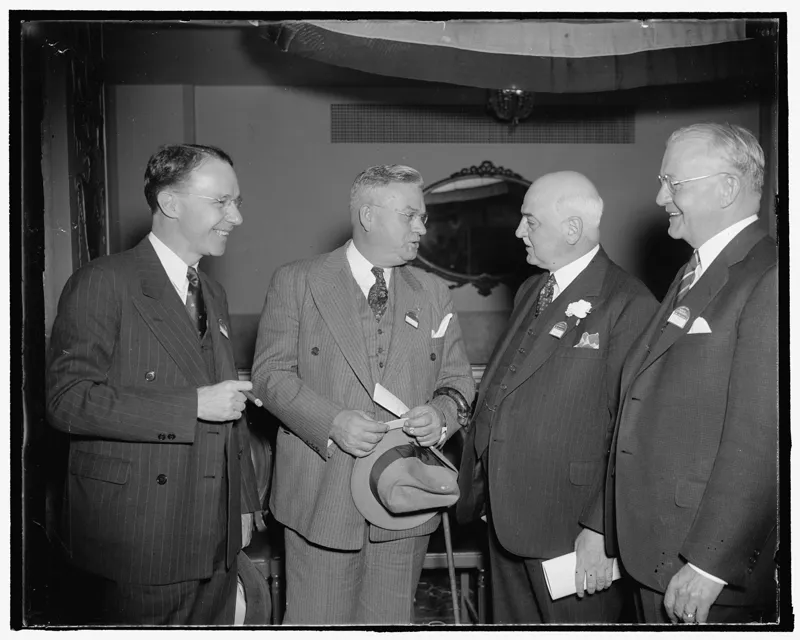 Photo: Library of Congress
Part 2: Hartsfield and Allen's Atlanta
- The airport and the Plan of Improvement
- "The city too busy to hate"
- Ivan Allen Jr.'s six points
- What Atlanta's growth meant for Georgia
Illustration (AI-generated)Part 3: The Vote, the White Primary and 1946
- Why the primary was the election
- Primus King and King v. Chapman
- The county unit system and 1946
- Three governors, and checking accounts
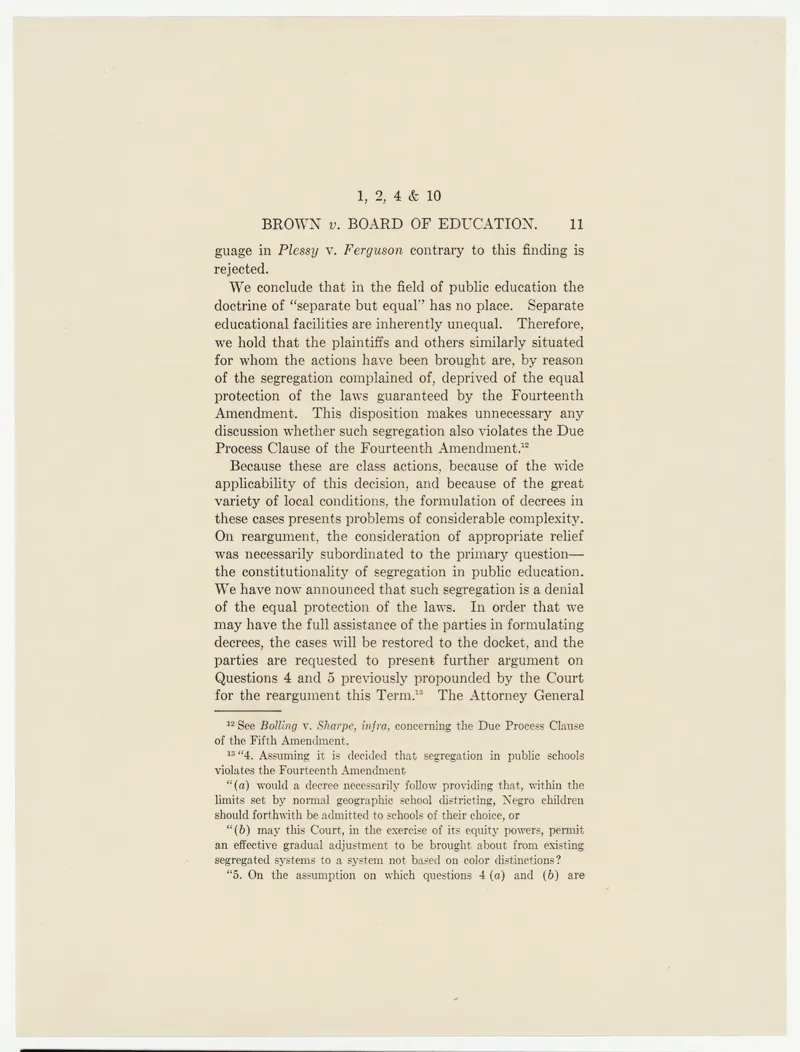 Photo: National Archives
Part 4: Brown v. Board and How Georgia Answered
- Brown v. Board of Education, 1954
- Georgia's leaders resist
- The 1956 state flag, in words
- The Sibley Commission and open schools
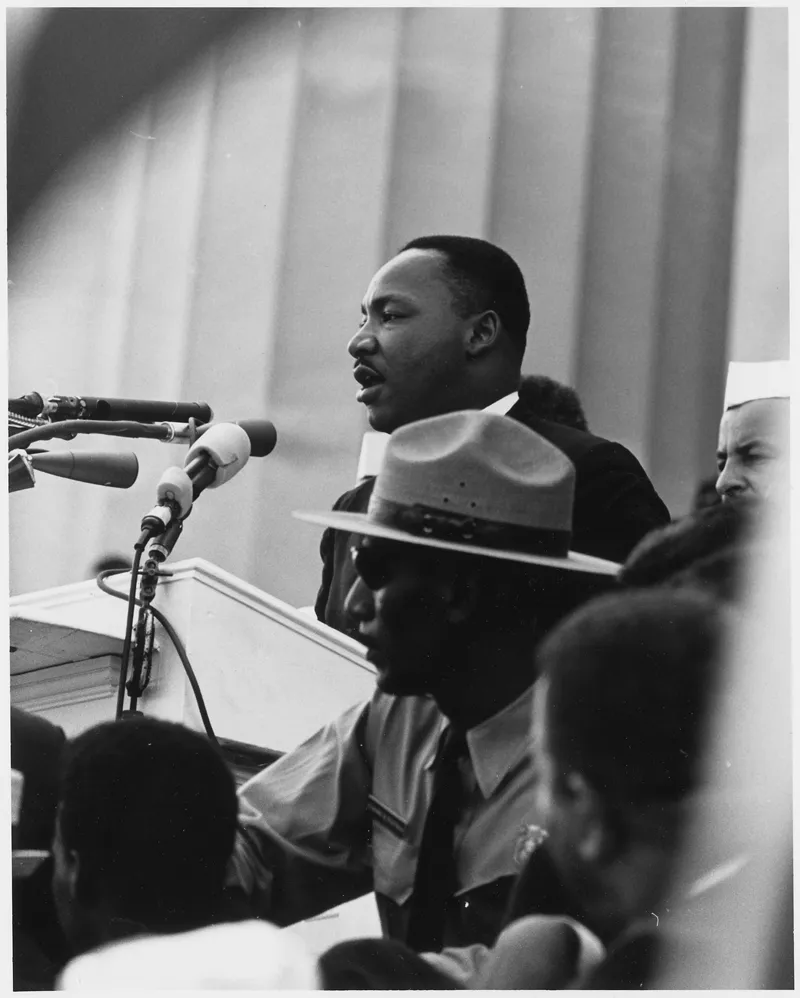 Photo: National Archives
Part 5: King, Lewis, SNCC, SCLC and the March
- Martin Luther King Jr. and SCLC
- John Lewis and SNCC
- The Albany Movement
- The March on Washington
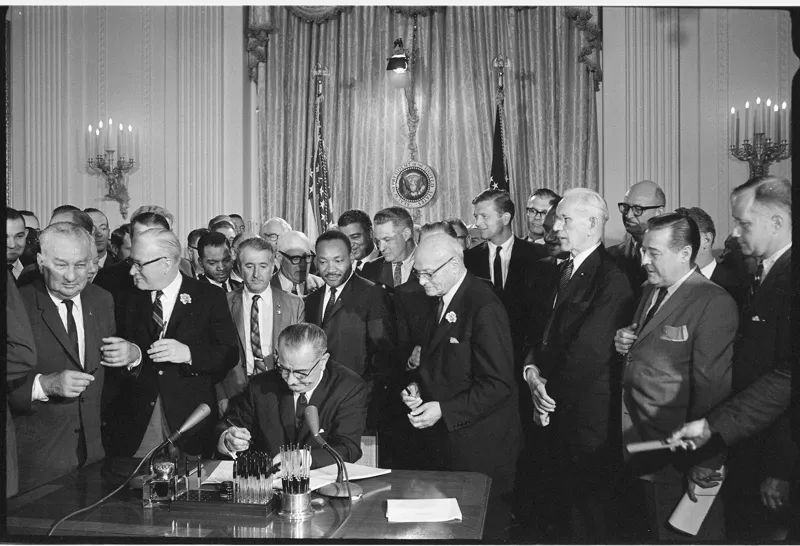 Photo: LBJ Library
Part 6: The Civil Rights Act and Lester Maddox
- What the 1964 Act did
- Resistance in Congress and the courts
- Lester Maddox and the Pickrick
- Governor Maddox, 1967–1971
Learning Targets & Success Criteria
I am learning to…
- Explain how new farm machines changed Georgia farming and moved Georgians from farms to cities
- Explain how Atlanta grew under mayors Hartsfield and Allen, and what that meant for the whole state
- Describe how the end of the white primary led into the 1946 governor's race and the "three governors"
- Explain how Georgia's leaders responded to Brown v. Board, including the 1956 flag and the Sibley Commission
- Describe the roles of King, Lewis, SCLC, SNCC, the Albany Movement and the March on Washington
- Explain the resistance to the Civil Rights Act of 1964 and Lester Maddox's part in it
I will be successful when I can…
- Use census numbers to show how tractors, farm size and the farm population changed from 1940 to 1970
- Name one thing Hartsfield and one thing Allen built, and one thing each did about segregation
- Explain how the county unit system let a candidate lose the popular vote and still win
- Check three accounts of the same event for consistency and name the source that settles it
- State both Sibley Commission reports fairly and say which one Georgia adopted
- Compare SCLC and SNCC, and explain what the movement learned in Albany
- State the arguments of the Act's opponents and supporters in their own terms, with evidence
Standards
Evaluate key post-World War II developments in Georgia, and evaluate the role of Georgia in the modern civil rights movement.
Explain how technology transformed agriculture and created a population shift within the state.
Explain how the development of Atlanta under mayors William B. Hartsfield and Ivan Allen, Jr. impacted the state.
Describe the relationship between the end of the white primary and the 1946 governor's race.
Explain Georgia's response to Brown v. Board of Education including the 1956 flag and the Sibley Commission.
Describe the role of individuals (Martin Luther King, Jr. and John Lewis), groups (SNCC and SCLC) and events (Albany Movement and March on Washington) in the Civil Rights Movement.
Explain the resistance to the 1964 Civil Rights Act, emphasizing the role of Lester Maddox.
Keep going
Free tools for Post-WWII & Civil Rights that go deeper.
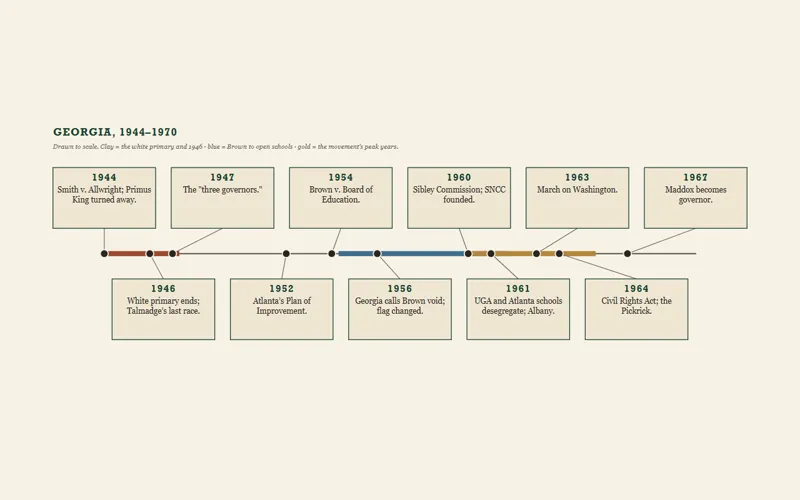
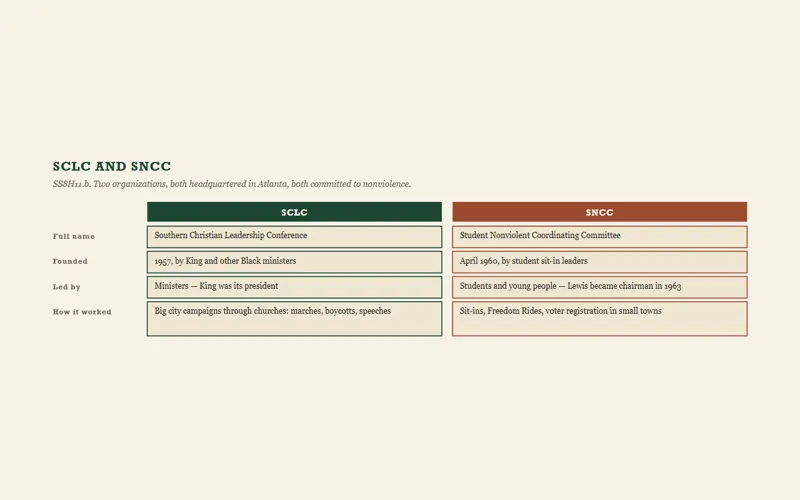
Maps, diagrams and globes on this page were drawn for this course from real coordinates (coastlines: Natural Earth, public domain). Pictures marked “Illustration (AI-generated)” were generated from written descriptions. They show places, not any real person, and are not photographs of a real location. Photographs are public domain and credited on the picture.