 Tobin
Explore
Jump in anywhere, in any order. Every activity reshuffles each time you play, so there's always something new. You earn finds for every right answer.
Big questions to wonder about
By the end of this unit, you'll be able to answer every one of these.
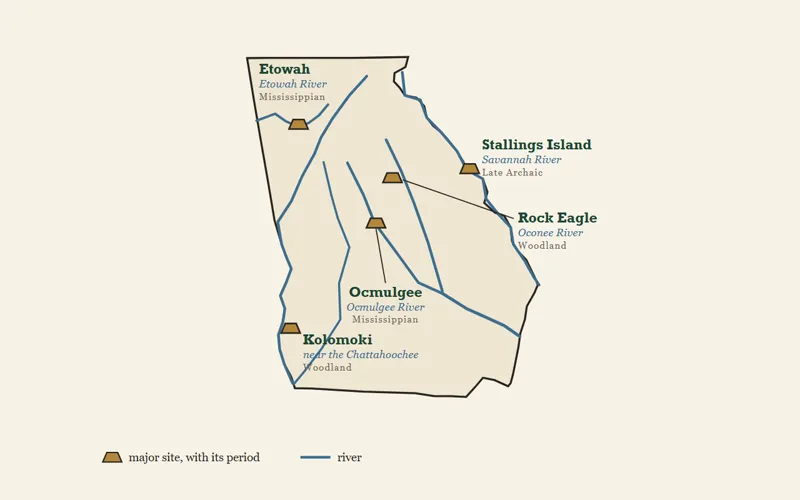
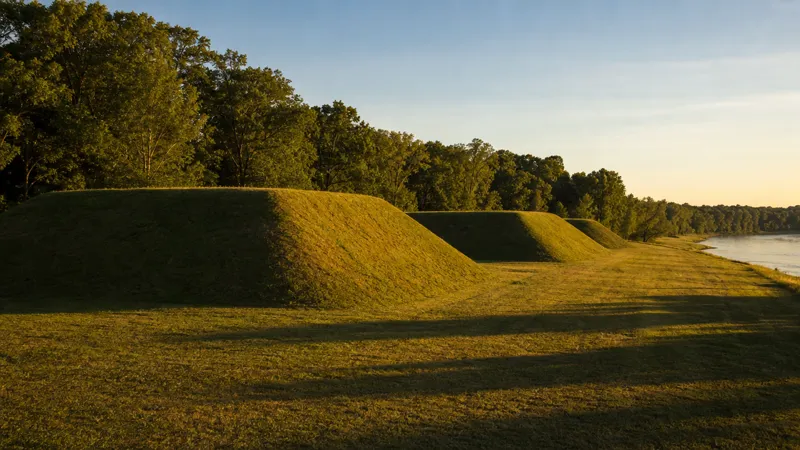
Why does nearly every big mound site in Georgia sit right beside a river?
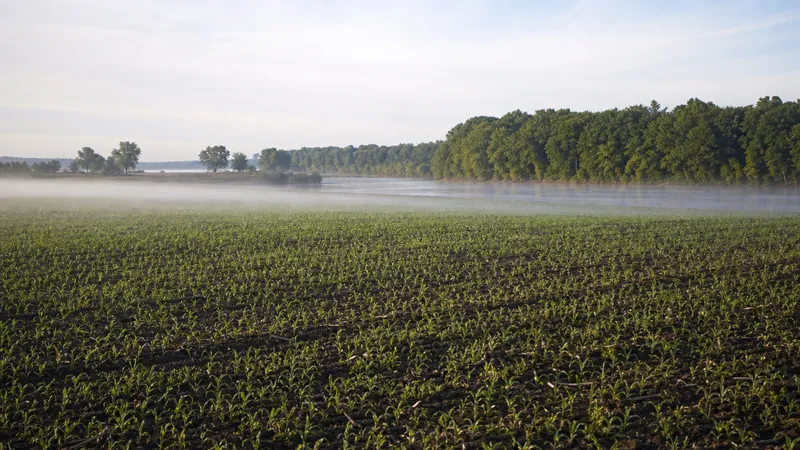
How could a town of thousands feed itself without plows, horses or metal tools?Illustration (AI-generated)
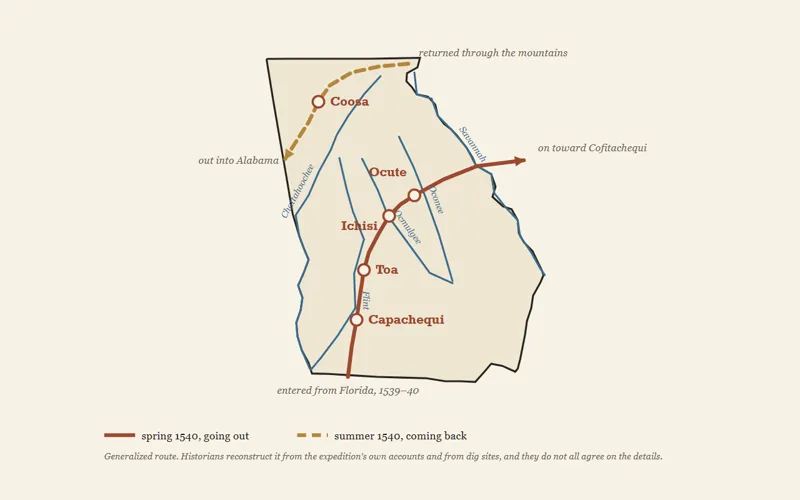
DeSoto found no gold and built no town. So why do historians call his trip one of the most important events in the Southeast?
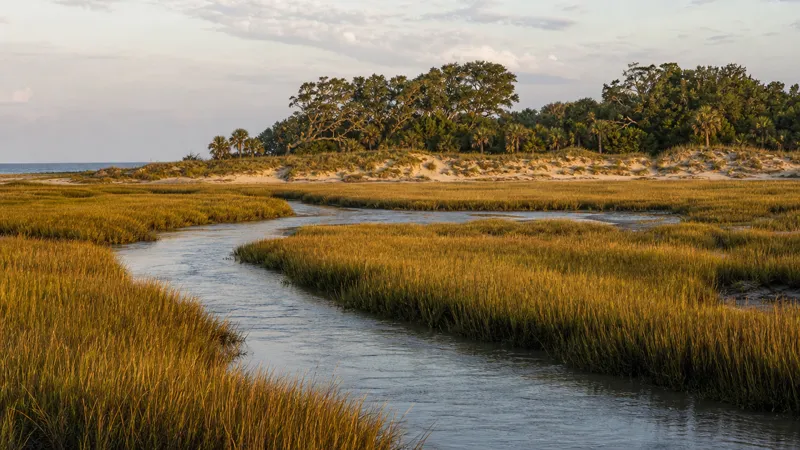
Spain reached the Georgia coast more than a century before Britain did. Why is Georgia a British colony in Unit 3?Illustration (AI-generated)
Word Wall
The 15 words you'll own by the end of this unit. Tap any card to flip it. Words you collect in the activities get a ✓.
Unit Roadmap
Four parts, in the order we'll learn them.
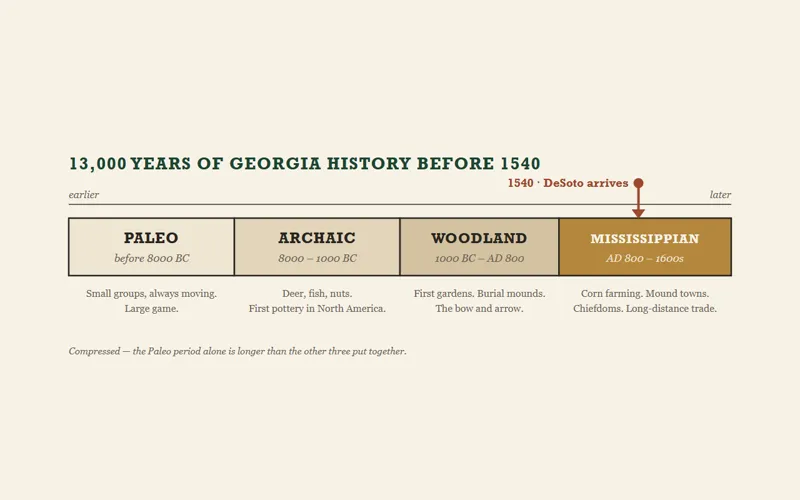
Part 1: The First People of Georgia
- 13,000 years of people in Georgia
- Artifacts and archaeologists
- Four culture periods
- Mississippian mound towns and chiefdoms
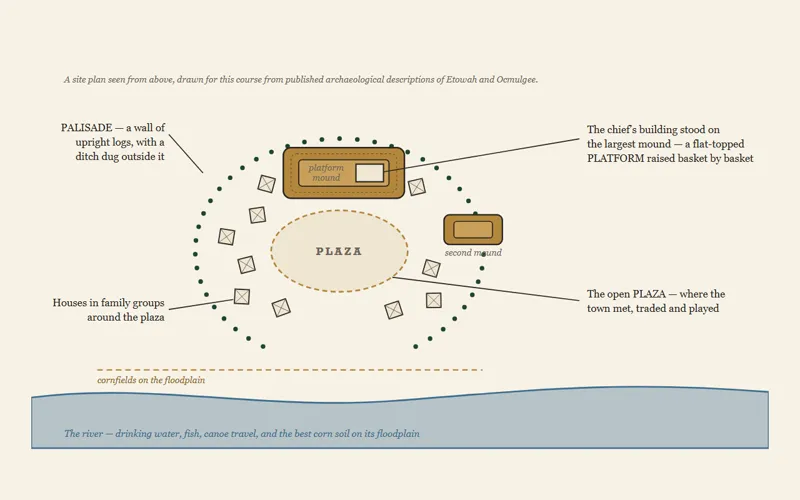
Part 2: Culture, Food, Tools, and Shelter
- How a town was laid out
- The three sisters
- Stone, bone, shell and wood
- Wattle-and-daub houses
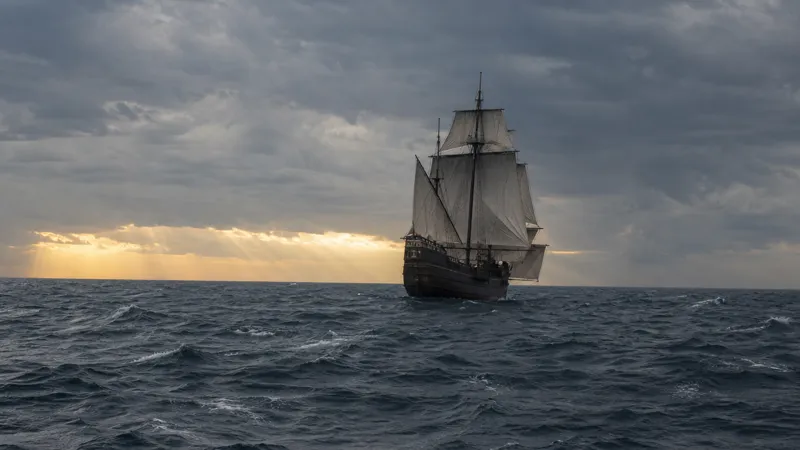 Illustration (AI-generated)
Part 3: Why Europeans Sailed West
- Wealth, faith and glory
- Caravel, compass, astrolabe, maps
- Spain in the Southeast
- Britain in the Southeast
Part 4: Spanish Contact: DeSoto and the Missions
- DeSoto crosses Georgia, 1540
- Disease and immunity
- Missions on the barrier islands
- What contact changed, and who survived
Learning Targets & Success Criteria
I am learning to…
- Describe the culture, food, tools and weapons, and shelter of the American Indians living in Georgia when Europeans arrived
- Explain why Europeans explored North America, and how Spain's and Britain's interests in the Southeast differed
- Evaluate how DeSoto's expedition and the Spanish missions changed life for American Indians in Georgia
I will be successful when I can…
- Put the four culture periods in order and name one change in each
- Locate Etowah, Ocmulgee and other major sites and explain why they sit on rivers
- Infer how people lived from artifacts like a stone point, a pot or a post mold in the soil
- Explain how the three sisters and wattle-and-daub houses worked
- Sort the goals and the results of Spain and Britain in the Southeast
- Trace DeSoto's route across Georgia and explain why disease was its largest effect
- Describe the Spanish missions on the barrier islands and why they were gone by about 1700
Standards
Evaluate the impact of European exploration and settlement on American Indians in Georgia.
Describe the characteristics of American Indians living in Georgia at the time of European contact; to include culture, food, weapons/tools, and shelter.
Explain reasons for European exploration and settlement of North America, with emphasis on the interests of the Spanish and British in the Southeastern area.
Evaluate the impact of Spanish contact on American Indians, including the explorations of Hernando DeSoto and the establishment of Spanish missions along the barrier islands.
Keep going
Free tools for Native Americans & European Exploration that go deeper.
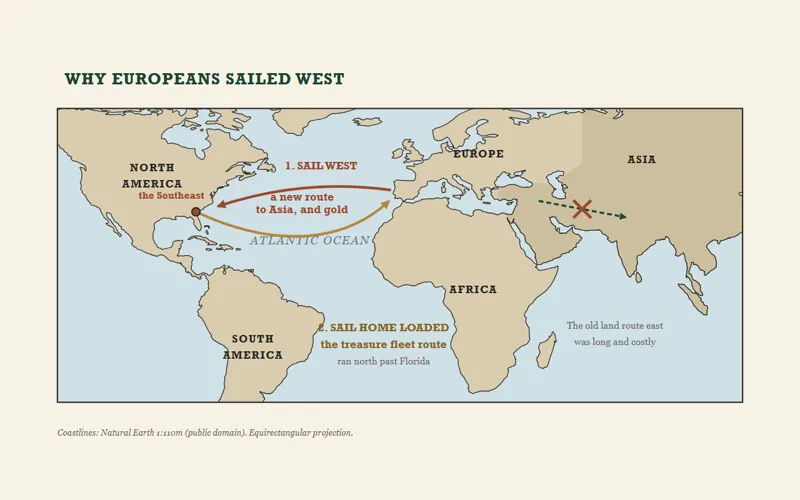
Maps, diagrams and globes on this page were drawn for this course from real coordinates (coastlines: Natural Earth, public domain). Pictures marked “Illustration (AI-generated)” were generated from written descriptions. They show places, not any real person, and are not photographs of a real location.