 Tobin
Everything for this unit
Start the unit
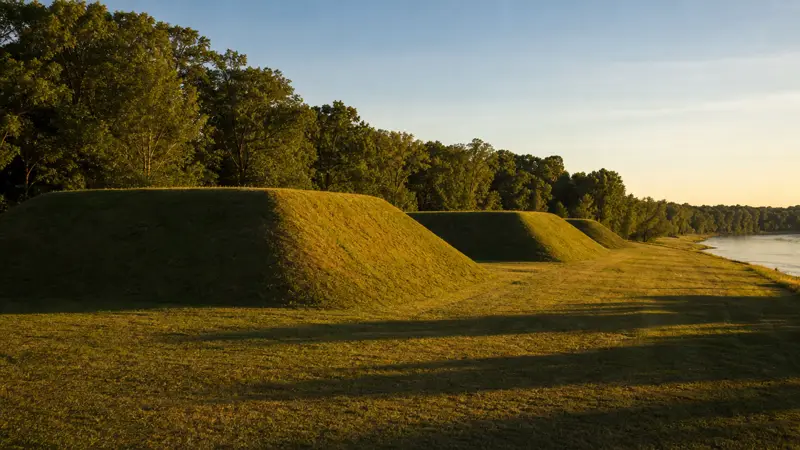
Exploration Lab: mound towns, artifacts, DeSoto & the missions
Ten hands-on parts: read Georgia's past from maps, a town plan and the objects people left in the ground, then follow the Europeans who arrived. The practice part makes new questions every time, so students can keep going as long as they like.
Thirteen thousand years before the ships
Georgia history does not start with a European ship. People lived here for roughly 13,000 years first, and they left no writing. Archaeologists read their story from artifacts: the things they made and used. They split those years into four culture periods. The periods are not four peoples. They are one long story that kept changing.
Put the periods in order
Why a broken pot matters
Which period is it?
Mound sites on the map
You can still walk on the places these people built. Tap a site to learn where it is, which period it comes from and what is there. Then switch to Find it and look for the pattern every site shares.
Read a Mississippian town
The people living in Georgia when Europeans arrived were Mississippian. Their towns were planned. This site plan shows a town from above, drawn from what archaeologists found at Etowah and Ocmulgee. Tap each part of the plan to see what it tells you about how people lived.
Seven parts of the town are waiting to be read.
A drawn site plan. No people are shown, the same way an archaeologist's site map shows none.
Build a wattle-and-daub house
Houses were small, square and warm. Put the four building steps in order.
The three sisters
Corn, beans and squash were planted in the same hill. Each crop did a job for the other two. Sort the jobs.
Artifact viewer: read the finds
Twelve finds from Mississippian Georgia, drawn from published descriptions. Pick a find, look closely, and decide what it tells you. Every answer goes on the evidence board under culture, food, weapons and tools, or shelter, the four things the standard asks you to describe.
Choose a find to examine it.
Evidence board
Sort it: primary or secondary source?
Source Detective: a Georgia town in 1540
Why Europeans sailed west
An ocean voyage around 1500 was costly and dangerous, so somebody had to want it badly enough to pay. Historians sort the reasons into wealth, faith and glory, and one voyage often carried all three. Then two countries came to the Southeast wanting very different things.
Wealth, faith or glory?
The tools that made it possible
Four tools reached Europe within about a century of each other. Tap a tool to see the problem it solved.
Spain or Britain? Sort the interests
Follow DeSoto across Georgia, 1540
Hernando DeSoto landed in Florida in 1539 with about 600 men, more than 200 horses and a herd of pigs. He had a license from Spain's king to explore, conquer and govern, and he was looking for gold. Press Next stop to march the route one town at a time.
The expedition starts in Florida, south of the map.
A generalized route. Historians rebuild it from the expedition's own written accounts and from dig sites with Spanish objects, and they do not all agree on the details.
Put the march in order
Goal or result?
Measured by its goals, the trip failed. Measured by its effects, it changed the Southeast. Sort the cards.
The mission coast, and what contact changed
After DeSoto found no gold, Spain changed its plan. From St. Augustine (1565), Franciscan friars moved north along the coast and built missions on the barrier islands. The coast that is now Georgia became the Spanish province of Guale. Tap a mission to read about it.
Before and after: tap a row to see what changed
Timeline builder: first contact to the founding of Georgia
Endless practice
New questions every time. Turn skills on or off to focus, and watch your streak.
Words you'll own
Tap a card to see what it means, with the Spanish word underneath.
Review Quest for this unit
The paid, game-style review that maps every student’s weak spots and tells you exactly how each one did. Everything else on this page is free.
Native Americans & Exploration — Review Quest
Game-style test review: a scouting mission maps what each student already knows, then skill zones teach, drill and check every SS8H1 element, with vocabulary flashcards. A reward code tells you exactly how each student did.
Videos
The videos chosen for this unit's class slides, each with something to watch for and two questions for after. They open on YouTube.
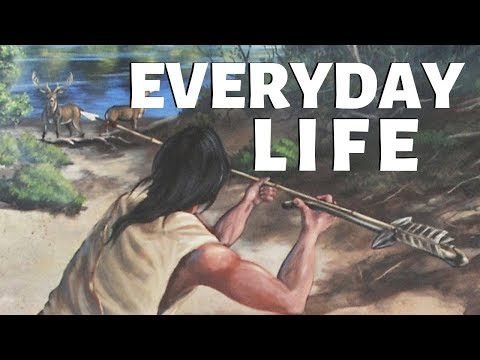
Everyday Life for Georgia’s Native Americans
Watch for: One thing people made, and what they made it out of.
- Name one job in the video that was done by women and one done by men.
- Which of the four — culture, food, tools, shelter — did the video show you best?

Following Hernando de Soto through La Florida
Watch for: How historians work out where the expedition went, when nobody drew a map of it.
- What kind of evidence do researchers use to trace the route?
- Why do historians disagree about the details of a route that was written down at the time?
Free test review
The print unit
The complete unit for teachers is on TPT.