 Tobin
Everything for this unit
Start the unit
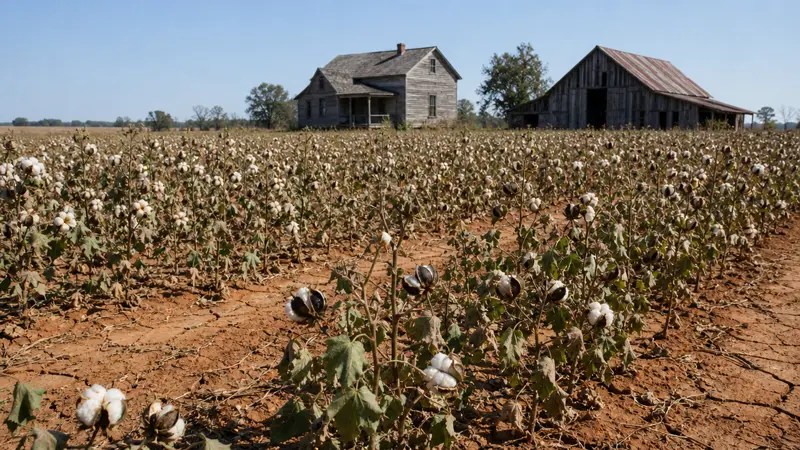
Early 20th Century Lab: wars, weevils, the New Deal & the home front
Nine hands-on parts on Georgia from 1917 to 1945, plus a Source Detective, built on real maps, real government numbers and real photographs. Every chart uses sourced numbers, and every practice part makes new questions each time.
Georgia and World War I: people, places, products
No battle came anywhere near Georgia, yet the state gave the war three things. Tap each camp on the map to see what it did, read the soldiers chart, then sort the cards into people, places and products.
People: who served
Sort it: people, places or products?
The Great Migration begins: push or pull?
Starting around 1915, hundreds of thousands of Black Southerners left for Chicago, Detroit, New York and Philadelphia. Some reasons pulled people north; others pushed them out of the South.
The boll weevil crosses Georgia
A beetle about a quarter of an inch long crossed into Texas from Mexico in 1892 and moved east. Step through the years to watch it cross Georgia on the map, and watch what happened to Georgia's cotton crop on the graph at the same time. Comparing a map with a data set is a skill (SSMGS11).
The dashed lines join the towns the U.S. Department of Agriculture named when it described the weevil line in 1916 and 1918; the department did not describe the rest of the line in those words, so it is not drawn. Percent of Georgia = square miles inside the weevil line ÷ Georgia’s land area, worked out from the USDA and Census numbers.
Read the graph in five steps
The same five steps work on every graph in this unit. Pick a graph, then tap each step.
Source viewer: the government's own map
Source viewer: what farmers were told to do
Drought, debt and the crash: why Georgia's Depression came early
For much of the country the 1920s were a boom. For rural Georgia they were already hard times. Follow each chain one link at a time, then put the whole story in order and match each economic factor to what it did.
Put it in order: the road to the Depression in Georgia
Which factor did it?
Two national graphs: cotton prices and jobs
Franklin Roosevelt and Warm Springs
For twenty years one of the most powerful men in the world kept coming back to a small town in Meriwether County, Georgia. Build his Warm Springs timeline, sort each date, and follow the electric bill that he said helped change rural America.
Timeline builder
Sort the dates: his health, what he built, or his power as president?
Four New Deal programs in Georgia
The New Deal aimed at relief (help people now), recovery (restart the economy) and reform (change the rules so a collapse like this does not happen again). Open each program, then take the match challenge.
Program match: which program is it?
Two Georgia graphs
Source viewer: a Social Security poster
Eugene Talmadge and the New Deal: two positions
Georgia's governor and the president gave opposite answers to the same question: when times are hard, who should help people, and who should pay? This part states both sides as the people who held them argued them. It does not say which side was right. Your job is to describe each one fairly.
The two positions, question by question
Who argued it?
What happened: put Talmadge's record in order
From staying out to Lend-Lease to Pearl Harbor
Between 1939 and 1941 the United States tried three answers to a war on the other side of the world: stay out, help without fighting, and finally join in. Sort the events, build the timeline, and read three documents from the time.
Stay out, help, or in the war?
Timeline builder, 1937–1941
Pearl Harbor: date, place, purpose, result
Source viewer: three documents
Georgia's home front on the map
During World War II the bases, the bomber plant and two shipyards brought federal money and steady paychecks to Georgia. Tap each site to read its purpose and its economic impact, then find them with the labels hidden.
Every post is named as it was during the war. Dots are placed at the towns, not at the exact gates.
The numbers: planes and ships
Sort it: purpose or economic impact?
Richard Russell and Carl Vinson
Geography is half of why Georgia got so many bases, a bomber plant and two shipyards. The other half is two Georgians in Congress who sat on the committees that decided where the military spent its money. Meet them, then play Who am I?
Who am I?
Sort it: military or economic contribution?
Source Detective: their own words
Two short cases built on primary sources: government reports and a farmer’s words about the cotton collapse, and two sentences from President Roosevelt a year apart.
Case 1: the crop is nigh to nothin’
Case 2: from arsenal to infamy
Endless practice
New questions every time, some of them read straight off the unit's graphs. Turn skills on or off to focus, and watch your streak.
Words you'll own
Tap a card to see what it means, with the Spanish word underneath.
Review Quest for this unit
The paid, game-style review that maps every student’s weak spots and tells you exactly how each one did. Everything else on this page is free.
Early 20th Century — Review Quest
Game-style test review: a scouting mission maps what each student already knows, then skill zones teach, drill and check every SS8H8 and SS8H9 element, with vocabulary flashcards. A reward code tells you exactly how each student did.
Videos
The videos chosen for this unit's class slides, each with something to watch for and two questions for after. They open on YouTube.

The boll weevil and the drought
Watch for: Watch for TWO causes of hard times in rural Georgia — and for when they hit.
- Why did a crop failure hurt people who never picked cotton — store owners, bankers?
- Georgia’s hard times started in the 1920s. Why is that earlier than you might expect?

Roosevelt at Warm Springs
Watch for: Watch for WHY Roosevelt came to Warm Springs, and what he built for other people there.
- Roosevelt came for his own health. How did he turn that into help for others?
- What did he see on Georgia’s back roads that a New Yorker might never have seen?

The New Deal puts America to work
Watch for: Watch for the New Deal programs you already know — and one you do not.
- Relief, recovery or reform: sort one program from the video.
- Why would a JOB help a family more than a check, in 1933?

Russell and Vinson: power players
Watch for: Watch for ONE military and ONE economic contribution from each man.
- Which of the two had more to do with the ships? Which with the bases?
- Why would a committee seat in Washington matter to a town in Georgia?
Free test review

The print unit
The complete unit for teachers is on TPT.